What Does a Regular House Clean Include? (And What Costs Extra)
Published 29 October 2026 · 6 min read
Short answer
A regular clean covers kitchen surfaces, the sink and hob, bathrooms and toilets, hoovering and mopping, reachable dusting and bins. Inside the oven, fridge and presses, walls, windows and carpet shampooing are usually extras, so agree a written list first.
A regular house clean covers the jobs that build up week to week: kitchen worktops, the sink and hob, bathrooms and toilets, hoovering and mopping floors, dusting the surfaces you can reach, and emptying bins. Anything that means emptying presses, getting inside appliances, moving heavy furniture or working at height is usually a deep clean or a paid extra, so agree the list before the first visit.
Most regular cleaners in Ireland are booked by the hour, weekly or fortnightly. What gets done in that time depends on the size of the house, how much tidying is needed first, and what you ask them to prioritise.
What does a standard clean cover, room by room?
These are the jobs most cleaners treat as the core of a regular visit. Use it as a starting point for your own list.
Kitchen
- Wipe worktops, splashbacks and the hob
- Clean the sink, taps and draining board
- Wipe the fronts of appliances, press doors and handles
- Wipe the outside of the microwave, kettle and toaster
- Empty bins, wipe the lids and put in fresh bags
- Sweep or hoover, then mop the floor
Bathrooms and toilets
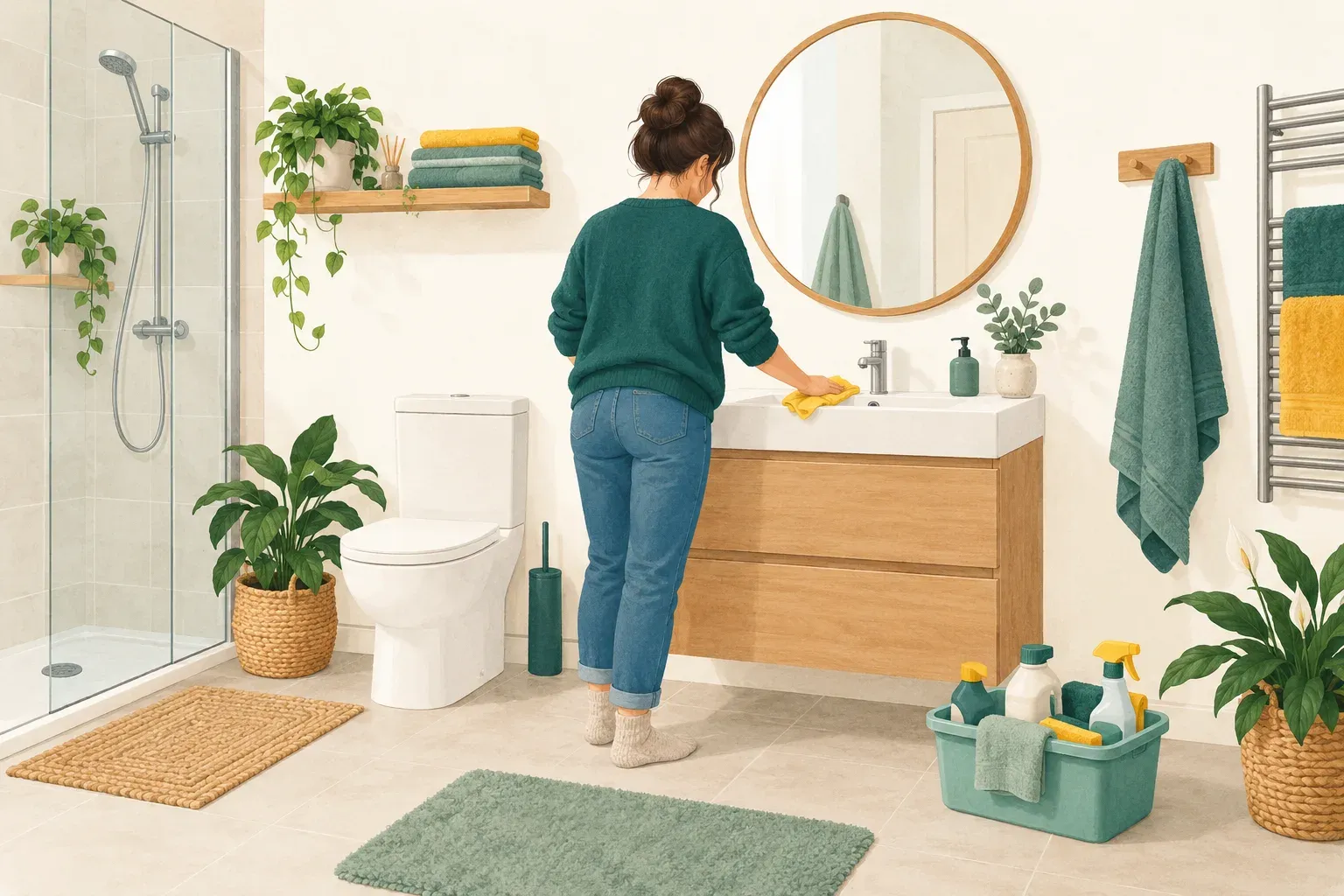
- Clean the toilet inside and out, including the seat hinges and base
- Clean the sink, taps and bath
- Wipe the shower tray, screen or curtain area and tiles
- Clean mirrors and wipe light switches
- Mop the floor
Bedrooms, living room and hall
- Dust reachable surfaces, shelves and skirting
- Hoover carpets and rugs, and hoover the stairs
- Mop hard floors
- Make beds, or change bed linen if you leave fresh sets out
- Straighten cushions and wipe door handles and switches
What usually costs extra?
The jobs below take longer, need specialist kit, or need things emptied first. Some cleaners will do them if you book extra time; others pass them on to specialists.
| Job | Why it is usually extra | Where to go next |
|---|---|---|
| Inside the oven | Heavy grease needs time and stronger products | Oven cleaning guide |
| Inside the fridge and freezer | Needs emptying, and the freezer may need defrosting | Kitchen hygiene guide |
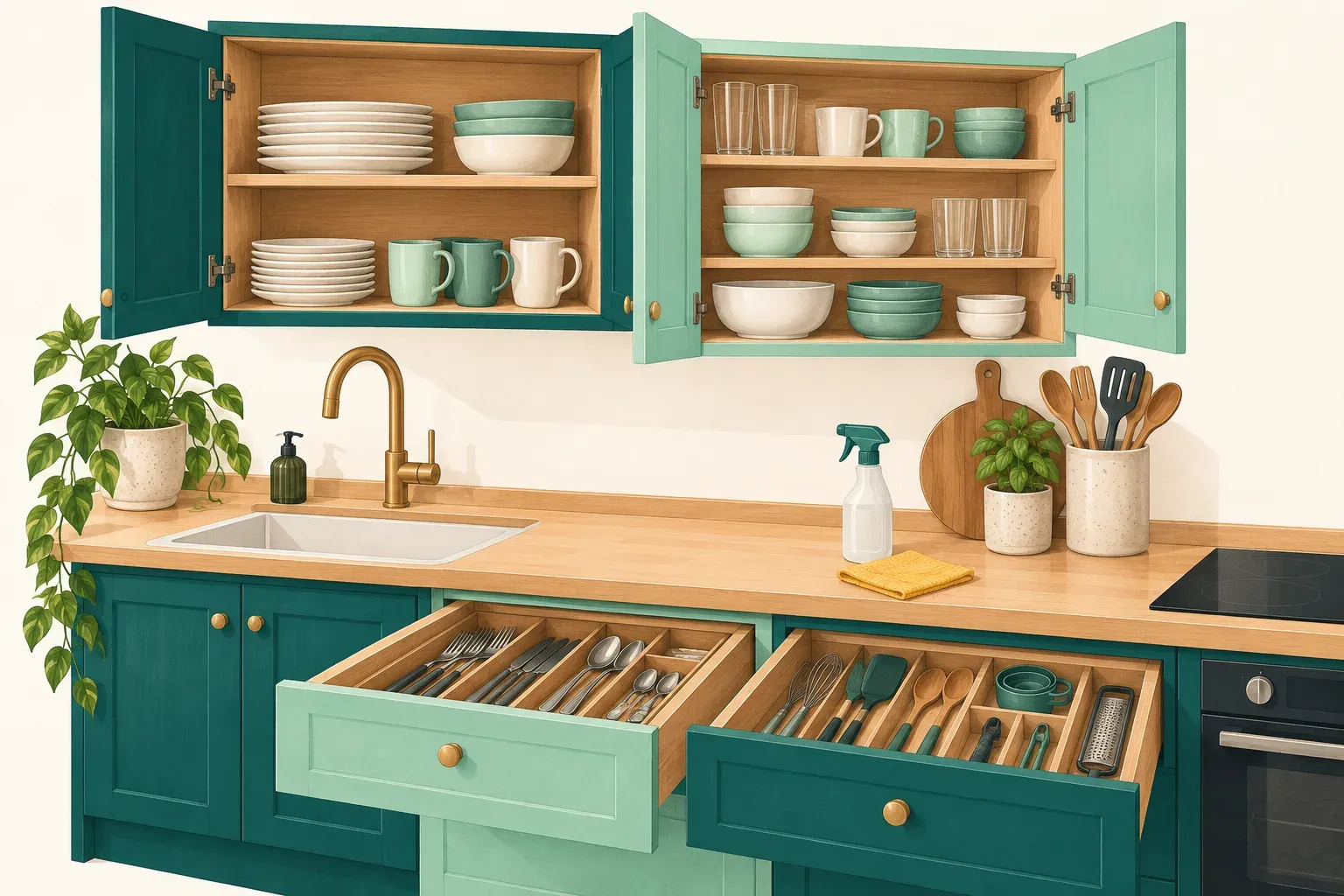
| Inside presses, wardrobes and drawers | Everything has to come out and go back | Deep cleaning checklist |
| Washing walls, doors and frames throughout | Slow work, usually done once or twice a year | Deep cleaning |
| Outside windows | Needs ladders or a water-fed pole | Window cleaning guide |
| Carpet and sofa shampooing | Needs an extraction machine and drying time | Carpet cleaning guide |
| Heavy limescale and stained grout | Needs repeated descaling | Limescale guide |
| Ironing and laundry | Often available, but uses up booked time | Ironing and laundry |
A useful trick is to rotate one extra job into each visit: inside the fridge one week, skirting boards and doors the next, the inside of the microwave after that. Over a couple of months the whole house gets a deeper going-over without paying for a one-off deep clean.
Ironing, laundry and changing beds
Plenty of regular cleaners will put on a wash at the start of the visit, hang it out or move it to the dryer, change beds and do some ironing while the machine runs. It all counts towards the hours you book, so decide what matters more to you on a given week.
To get the most out of it:
- Leave laundry sorted, with anything delicate or dry-clean-only kept separate.
- Say which items should not be ironed or tumble-dried.
- Leave clean bed linen out on the bed you want changed.
- If anyone in the house has a dust mite allergy, the HSE recommends washing bedclothes at 60°C every week, so check your bedding can take it.
If you mainly want ironing done, a separate ironing and laundry service may be better value than paying a cleaner's hourly rate.
Who supplies the products and equipment?
This varies more than people expect. One Dublin service that advertises regular cleaning from €22 an hour expects the customer to supply products and equipment unless you buy an add-on. Many independent cleaners also use the household's own hoover and products. Other companies bring everything and build it into the price. Ask before you book.
If you are supplying, have these ready before the first visit:
- A working hoover with an empty bin or a spare bag
- A mop and bucket
- Microfibre cloths and a couple of sponges
- A multi-surface spray, a bathroom cleaner, toilet cleaner and glass cleaner
- Rubber gloves and bin bags
Keep products in their original labelled containers and tell your cleaner about anything you would rather they did not use. Cleaning products must never be mixed: the National Poisons Information Centre warns that bleach mixed with ammonia or with acids, including vinegar and some toilet cleaners, gives off toxic gases. Mention any natural stone worktops or wooden floors too, because vinegar's acid can damage natural stone and hardwood finishes. Our guide to safe cleaning products around children and pets covers storage and pets.
How much does a regular clean cost?
Regular cleaning is priced by the hour, usually with a minimum booking. In advertised prices we checked in October 2026:
| Source | Advertised rate | Minimum |
|---|---|---|
| One provider's market estimate | €21 to €28 an hour in Dublin, €16 to €22 outside Dublin | Usually two hours |
| A Dublin booking service | From €22 an hour, products extra | Varies |
| A cleaning company's price table | €25 to €35 an hour | Two to three hours |
These are advertised prices, not a national average. Our guide to cleaner costs and the price guide go into more detail.
If you employ a cleaner yourself rather than buying from a business, they are entitled to at least the national minimum wage: €14.15 an hour for adults from 1 January 2026, with an increase to €14.94 announced from 1 January 2027. See employing a cleaner and tax for when you count as an employer.
How to agree the task list
Disagreements with cleaners usually come from different assumptions, not bad work. A few minutes at the start saves a lot of awkwardness.
- Walk round together on the first visit. Point out the rooms that matter most and anything fragile.
- Put it in writing. A short list in a text message is enough. Our cleaning brief builder writes one you can send.
- Rank the jobs. Kitchen and bathrooms usually come first because they take longest and matter most. Say what can be skipped if time runs short.
- Agree hours or tasks. Decide whether you are paying for a fixed number of hours or for the list, and what happens if the cleaner finishes early or runs over.
- Review after two or three visits. Adjust the list once you both know how long things take.
For timings by house size, see how long a house clean takes, and for weekly versus fortnightly visits see how often to get a cleaner.
Regular, deep or end of tenancy clean: which do you need?
| Type of clean | What it is for | Typical scope |
|---|---|---|
| Regular clean | Keeping on top of a lived-in home | Surfaces, bathrooms, floors, dusting, bins |
| Deep clean | A once-off reset, or starting with a new cleaner | Adds inside presses and appliances, skirting, doors, limescale, behind furniture |
| End of tenancy clean | Moving out or in | Empty property, every surface inside and out, oven usually included or priced separately |
If the house has not been cleaned properly for a while, many cleaners suggest a deep clean first and regular visits after. Ready to look? Browse cleaners by county, for example in Dublin, Cork or Galway, and check our first visit checklist.
Questions people ask
Do regular cleaners clean inside the oven?
Not usually as part of a standard visit. Some will do it as a paid extra if you book more time, and specialist oven cleaners handle heavy build-up, double ovens and range cookers.
Will my cleaner do ironing and laundry?
Many regular cleaners will put on a wash, change beds and iron while the machine runs, but it comes out of the hours you book. Agree in advance whether laundry replaces some cleaning or needs extra time.
Should I tidy up before the cleaner arrives?
Clearing clothes, toys and dishes off floors and worktops lets the cleaner spend your paid time cleaning rather than tidying. Agree whether putting things away is part of the job.
Do I have to provide the cleaning products?
It depends on the cleaner. Some companies bring everything, some charge extra for supplies, and many independent cleaners use the household's own hoover, mop and products. Ask before the first visit.