Deep Cleaning Checklist: Room by Room for Irish Homes
Published 29 October 2026 · 5 min read
Short answer
A deep clean reaches what regular cleaning skips: inside presses and appliances, behind furniture, skirting, doors, switches, limescale and grout. Work top to bottom and dry before wet, one room at a time, and never mix cleaning products.
A deep clean is a top-to-bottom clean that reaches what a regular visit skips: inside presses and appliances, behind and under furniture, skirting boards, doors and switches, limescale, grout and light fittings. Work one room at a time, top to bottom, and finish each room before moving on, so dust from high surfaces never lands on a floor you have already done.
Use the checklists below for a spring clean, before guests arrive, or to brief a deep cleaning service.
Before you start: supplies and safety
Gather everything first so you are not stopping halfway through a room.
- Hoover with crevice and brush attachments, and a mop and bucket
- Plenty of microfibre cloths, a scrubbing brush and an old toothbrush for grout
- A degreaser for the kitchen, a bathroom descaler and a glass cleaner
- Rubber gloves and bin bags
- A step stool for high presses and light fittings
Three safety rules matter more than any technique:
- Never mix products. Bleach with ammonia gives off chloramine gases, and bleach with acids, including vinegar and some toilet cleaners, releases chlorine gas, according to the National Poisons Information Centre. This matters most in bathrooms, where a descaler and a bleach-based cleaner often sit side by side. Rinse with water between products.
- Ventilate. Open a window or run the extractor while you work.
- Check the surface first. Vinegar's acid can damage natural stone, stone tiles and hardwood finishes, and bicarbonate of soda is mildly abrasive, so test anything on a hidden patch and follow the manufacturer's care instructions.
If you get a splash in the eyes or on skin, rinse with running water for 15 minutes. The Poisons Information Line is 01 809 2166, 8am to 10pm every day, and for serious symptoms call 112 or 999.
Kitchen checklist
The kitchen takes longest, so do it while you are fresh.
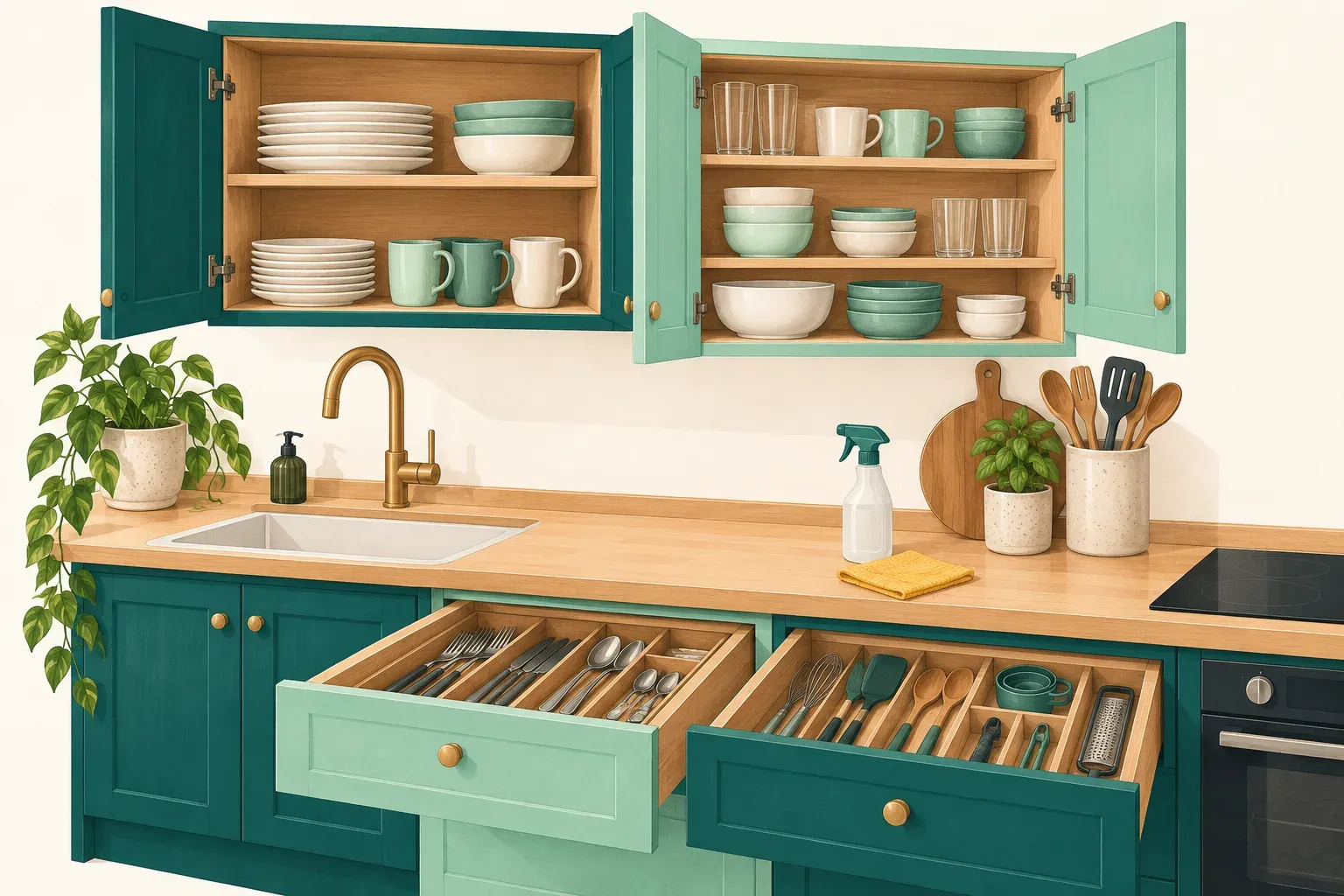
- Empty and wipe the inside of every press and drawer, and the tops of high presses
- Degrease press doors, handles and the splashback
- Clean the extractor hood and soak or replace its filters
- Clean the oven, racks and door glass, or book it separately
- Pull out the cooker, fridge and washing machine where safe and clean behind and under them
- Empty the fridge, wash shelves and drawers, rinse and dry
- Defrost the freezer if it has iced up
- Descale the kettle and the sink taps
- Clean the dishwasher filter and the washing machine door seal and drawer
- Wash the bin inside and out
- Scrub the floor, including edges and under the kickboards
For the fridge, safefood advises washing handles, shelves and compartments with warm soapy water, then rinsing and drying with clean kitchen roll or a clean tea towel. The FSAI suggests bicarbonate of soda as one option for cleaning a fridge interior. When it is back on, check it is at 5°C or below with a fridge thermometer, because the numbers on the dial are not a temperature. More in our kitchen hygiene guide and oven cleaning guide.
Bathroom checklist
- Dust the extractor fan cover and light fitting
- Descale the shower head, taps, screen and tiles
- Scrub grout and the silicone around the bath and shower
- Clean behind and around the base of the toilet, and under the rim
- Wipe the cabinet inside and out, and throw out old products
- Wash the bath panel, radiator or towel rail, and the door
- Wash the bathmat and shower curtain
- Clean the floor, including behind the toilet
In hard water areas, limescale is the slowest bathroom job. See our limescale guide for how to descale without damaging fittings. Small spots of black mould on silicone or grout can often be cleaned, but larger patches need a different approach: our mould and damp guide explains when.
Bedrooms checklist
- Dust the tops of wardrobes, picture frames and the light shade
- Empty and wipe wardrobes and drawers
- Hoover the mattress and turn or rotate it if the maker recommends it
- Wash duvets, pillows and mattress protectors if the labels allow
- Hoover under the bed and behind furniture
- Wipe skirting, sills, the door and the radiator
- Wash or hoover curtains, and dust blinds slat by slat
If anyone in the house has allergies or asthma, the HSE recommends washing bedclothes at 60°C weekly and damp-dusting. Our dust mites and allergies guide has more.
Living room and hall checklist
- Hoover the sofa, including under the cushions and down the sides
- Dust bookshelves, ornaments, the TV and behind it
- Clean light fittings, lampshades and ceiling corners for cobwebs
- Wipe skirting boards, door frames, doors and handles
- Clean light switches and the plates around sockets with a barely damp cloth
- Wipe radiators and hoover the gap behind them
- Clean inside windows, sills and the tracks of sliding doors
- Hoover the stairs edge to edge and wipe the banisters
- Move furniture and hoover underneath, then clean hard floors
While you are up high, dust the smoke alarms. The HSE advises keeping smoke alarms free of dust and testing them weekly.
What order should you clean in?
- Top to bottom. Ceilings, light fittings and the tops of presses first, floors last.
- Dry before wet. Dust and hoover before you wipe or mop, or you will be pushing wet dust around.
- Give products time. Spray the oven, shower or hob, then dust another part of the room while it works.
- Work towards the door. Finish each room at the exit so you are not walking on clean floors.
- Do the kitchen and bathroom early. They take longest and need the most energy.
Hiring a deep clean: what does it cost?
Deep cleans are usually priced per job by the number of bedrooms. In advertised prices we checked in October 2026, one provider lists starting prices of €120, €180, €250 and €330 for one to four bedrooms, while another lists €240, €280, €320 and €370, and €450 for five bedrooms. What is included differs, and the final quote often depends on the condition of the house and extras such as the oven or carpets.
| Bedrooms | Lower advertised price | Higher advertised price |
|---|---|---|
| 1 | From €120 | €240 |
| 2 | From €180 | €280 |
| 3 | From €250 | €320 |
| 4 | From €330 | €370 |
To get an accurate quote, send photos and a clear list of what you want done. Our cleaning brief builder helps, and our deep clean cost guide explains why quotes vary. If you are moving out of a rental, use the end of tenancy checklist instead, because the standard and the goal are different.
You can find deep cleaning services by county, including in Dublin, Cork and Limerick.
Questions people ask
How often should a house get a deep clean?
There is no official rule. A once-off deep clean suits spring, the run-up to Christmas or a new start with a cleaner, and households with a regular cleaner can spread deeper jobs across normal visits instead.
Is a deep clean the same as an end of tenancy clean?
They overlap, but an end of tenancy clean is done in an empty property and aims to leave it in the condition the tenancy started in, allowing for normal wear and tear. A deep clean is done around your furniture and belongings.
Can I use vinegar and bleach in the same deep clean?
Not together. Bleach mixed with acids such as vinegar releases chlorine gas. Use one product, rinse the surface with water, and keep the room ventilated before switching to another.
Why is my deep clean quote higher than the website price?
Advertised deep clean prices are usually starting prices. The final quote depends on the size and condition of the house and on extras such as the oven, carpets or windows.