Kitchen Hygiene: Cleaning Boards, Cloths and Fridges Safely
Published 29 October 2026 · 4 min read
Short answer
Scrub chopping boards in hot soapy water after every use, keep separate boards for raw meat, clean or replace dishcloths and sponges at least every two days, and keep the fridge at 5°C or below, checked with a thermometer. Wash hands for at least 20 seconds.
Good kitchen hygiene comes down to a few habits, and safefood's advice covers them: scrub chopping boards in hot soapy water after every use, keep separate boards for raw meat and ready-to-eat food, clean or replace dishcloths and sponges at least every two days, wash your hands for at least 20 seconds, and keep the fridge at 5°C or below. The aim is to stop bacteria from raw food spreading to things you will eat without cooking.
Chopping boards
safefood advises scrubbing chopping boards thoroughly with hot soapy water after every use, especially after raw foods. Separate boards for raw meat and ready-to-eat foods help prevent cross-contamination.
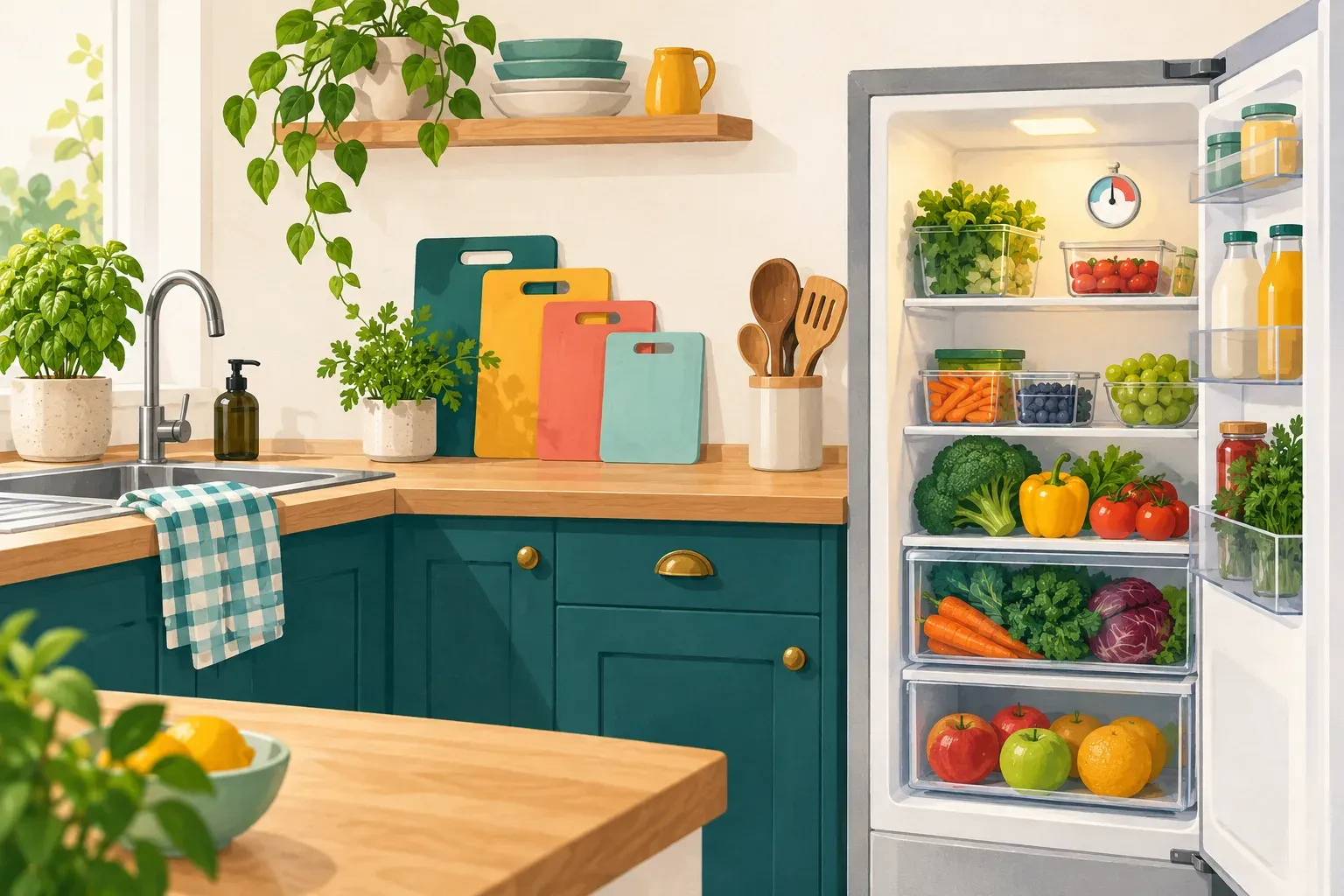
- Use one board for raw meat, poultry and fish, and another for bread, salad, fruit and cooked food
- Colour-code them or mark them, so everyone in the house knows which is which
- Scrub with hot soapy water and a brush after every use, not just a rinse
- Dry boards standing up so air gets to both sides
- Replace boards with deep cuts and grooves, which are hard to clean
If you only have one board, prepare ready-to-eat food first and raw meat last, then scrub the board straight away. safefood's kitchen hygiene guide has more on preparing food safely.
Dishcloths, sponges and tea towels
Damp cloths and sponges are easy to forget. safefood advises cleaning or replacing them at least every two days, and immediately after they come into contact with raw meat or vegetable juices.
- Keep a pile of clean cloths so swapping is easy. Microfibre or cotton cloths can go in a hot wash.
- Use kitchen roll for raw meat juices and throw it away, rather than a cloth you will use again.
- Separate cloths for separate jobs. Keep floor and bathroom cloths well away from the kitchen.
- Tea towels are for drying clean dishes and hands, not for wiping worktops or holding raw meat. Change them often.
- Wash microfibre properly. It needs laundering to stop it carrying dirt from one surface to the next.
Cleaning the fridge
safefood recommends regularly washing the handles, shelves and compartments with warm soapy water, then rinsing and drying with clean kitchen roll or a clean tea towel. Wipe up spills immediately. The FSAI suggests bicarbonate of soda as one option for cleaning the inside.
- Pick a time when the fridge is fairly empty, such as before the weekly shop
- Take everything out and put chilled food in a cool bag
- Throw out anything past its use-by date
- Remove shelves and drawers and wash them in warm soapy water
- Wipe the inside walls, door seals and handles
- Rinse and dry everything with clean kitchen roll or a clean tea towel
- Put food back quickly, with raw meat covered and kept away from ready-to-eat food
Check the temperature
safefood says the fridge should be 5°C or below. Check it with a mercury-free fridge thermometer, because the numbers on the control dial do not necessarily tell you the temperature. Check again after a big shop or a hot day, and do not overfill the fridge so cold air can circulate.
Washing your hands
Hands carry bacteria from one thing to another. safefood advises washing with warm soapy water for at least 20 seconds, particularly:
- Before preparing food
- After handling raw food
- After touching the bin
- After touching pets
- After using the toilet
Dry hands on a clean towel or kitchen roll, not the tea towel you dry dishes with.
Worktops, sinks, taps and bins
- Clean as you go. Wipe worktops with hot soapy water after preparing raw food, then use a suitable disinfectant spray if you want to disinfect, following the label.
- Don't rely on vinegar to disinfect. It is useful for limescale, but should not be treated as a substitute for a suitable disinfectant.
- Clean touch points. Tap handles, the fridge handle, press handles and the bin lid are touched with dirty hands. Wipe them daily.
- Wash the bin inside and out regularly, and dry it before putting in a new liner.
- Sink and plughole: wash out after preparing raw meat, and clear food from the plughole.
Using cleaning products safely in the kitchen
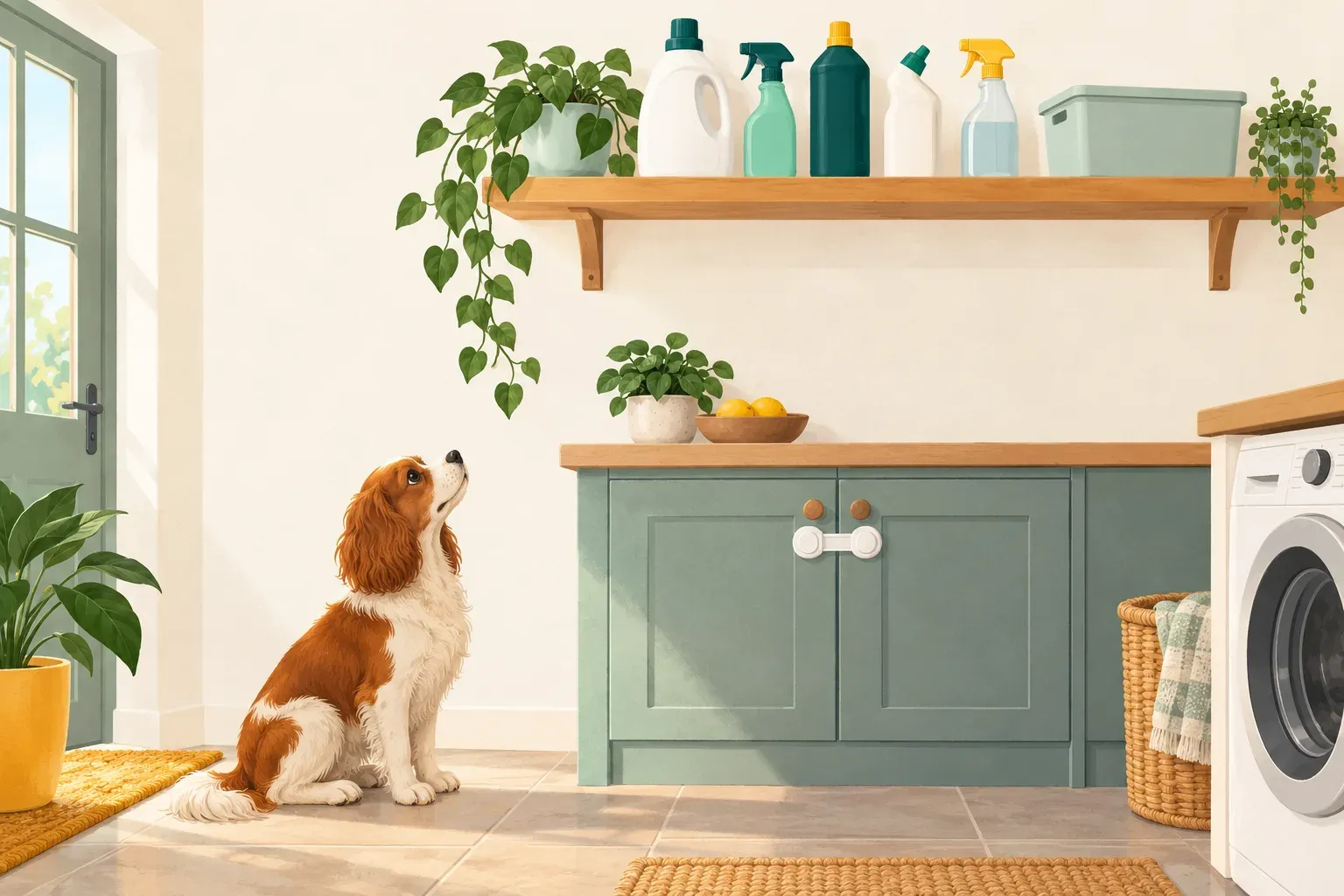
Many households keep cleaning products under the kitchen sink, which is within easy reach of small children. Keep them in their original labelled containers, out of children's reach and sight, preferably in a locked press, and never decant them into drinks bottles. Never mix products: bleach with ammonia or with acids, including vinegar, gives off toxic gases. Keep products away from food and food surfaces, and rinse surfaces where the label says to.
If someone swallows a product or gets it in their eyes, the Poisons Information Line is 01 809 2166, 8am to 10pm every day. Our guide to safe cleaning products around children and pets covers first aid and storage.
A kitchen hygiene routine
| Job | When | Source |
|---|---|---|
| Scrub chopping boards with hot soapy water | After every use | safefood |
| Clean or replace dishcloths and sponges | At least every two days, and after raw meat juices | safefood |
| Wash hands with warm soapy water for 20 seconds | Before cooking, after raw food, bins, pets or the toilet | safefood |
| Wipe up fridge spills | Immediately | safefood |
| Wash fridge shelves, compartments and handles | Regularly | safefood |
| Check the fridge is at 5°C or below | Regularly, with a thermometer | safefood |
For a bigger kitchen reset, our deep cleaning checklist covers inside presses, behind appliances and the extractor, and our oven cleaning guide deals with the oven. Moving into a new place? Start with our move-in cleaning checklist. If you would rather hand the kitchen over to someone else, browse regular cleaners and cleaners by county.
Questions people ask
How often should I change my dishcloth?
safefood advises cleaning or replacing dishcloths and sponges at least every two days, and straight away after they touch raw meat or vegetable juices.
What temperature should my fridge be?
safefood says 5°C or below. Check it with a mercury-free fridge thermometer, because the numbers on the control dial do not necessarily tell you the temperature.
Do I need separate chopping boards?
safefood says separate boards for raw meat and ready-to-eat foods help prevent cross-contamination. Whatever you use, scrub boards with hot soapy water after every use.
Can I clean the kitchen with vinegar instead of a disinfectant?
Vinegar is good on limescale but should not be treated as a substitute for a suitable disinfectant. Use hot soapy water for everyday cleaning and a proper product where you need to disinfect.