Safe Cleaning Products Around Children and Pets in Ireland
Published 29 October 2026 · 4 min read
Short answer
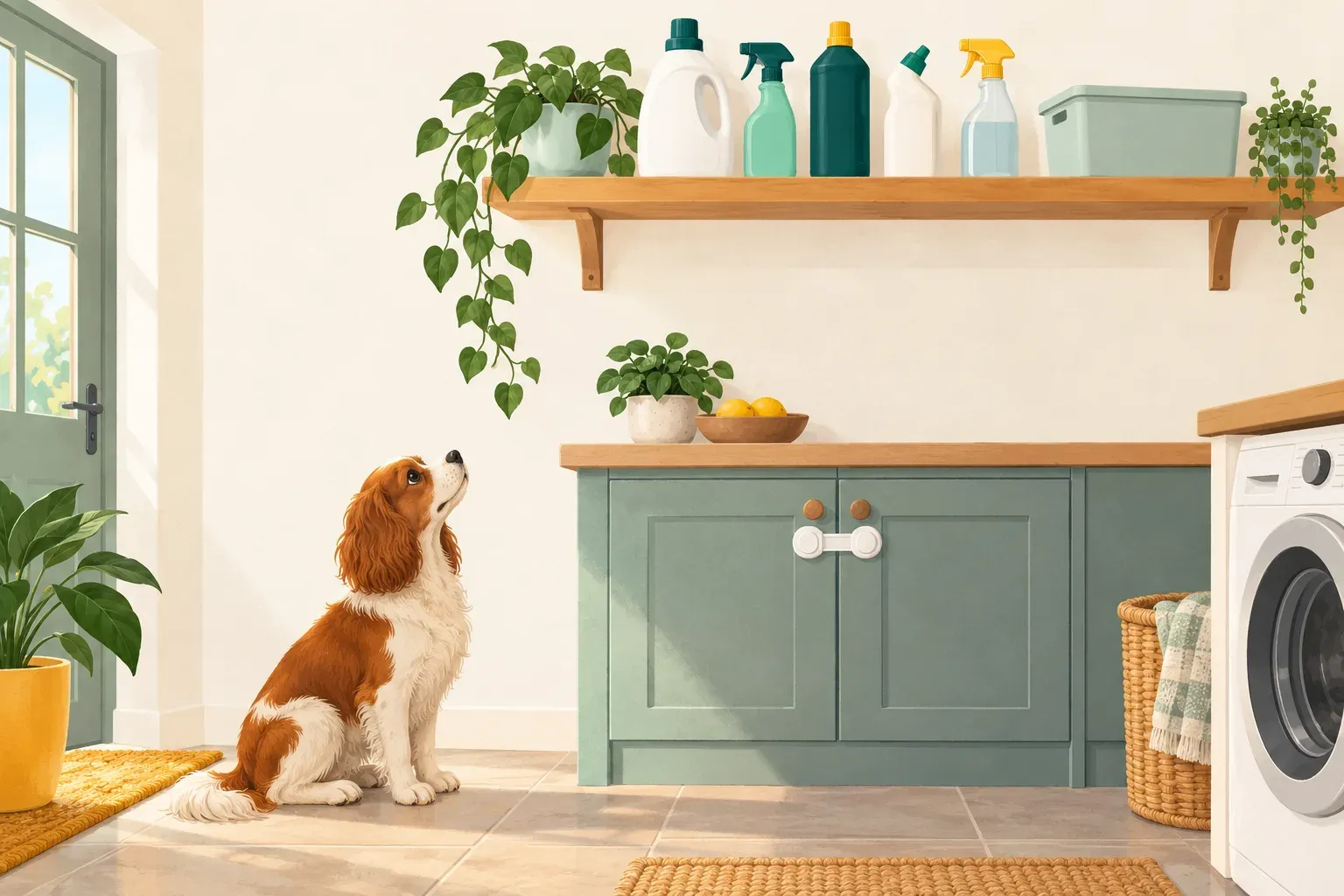
Keep cleaning products in their original labelled containers, locked away out of children's sight and reach, and never mix them: bleach with ammonia or acids gives off toxic gas. For advice, ring the Poisons Information Line on 01 809 2166 (8am to 10pm daily). For pets, contact a vet.
The habits that matter most are simple. Keep every cleaning product in its original labelled container in a locked or high press, never mix products, and save the Poisons Information Line, 01 809 2166, open 8am to 10pm every day, in your phone today.
Never mix cleaning products
This is the single most important rule. The National Poisons Information Centre (NPIC) warns that:
- Bleach plus ammonia produces toxic chloramine gases.
- Bleach plus acids, including vinegar and some toilet cleaners, releases chlorine gas.
Both can seriously injure the lungs. Acids are not only in vinegar but in some toilet cleaners too, so the safest habit is simple: use one product at a time, rinse the surface with water before switching, and keep the room ventilated. This matters most in bathrooms, where a bleach spray, a toilet cleaner and a descaler often sit side by side. See our limescale guide and mould guide, where this mistake is easy to make.
How to store cleaning products safely
The NPIC's prevention guidelines are clear:
- Keep chemicals out of children's reach and sight, preferably in a locked press
- Keep products in their original labelled containers
- Never decant cleaners into drinks bottles, cups or food containers
- Remember that child-resistant caps are not childproof
- Put products away straight after use, even if you are only answering the door
A few practical additions:
- Move products out from under the sink. It is the easiest place for a crawling baby to reach. A high press or a lockable box works better.
- Fit press locks on any low press that holds chemicals.
- Watch detergent capsules and dishwasher tablets. They are small and colourful, and they appear among the household products in NPIC enquiries.
- Check visitors' bags and grandparents' houses, where products may not be stored with children in mind.
- Tell your cleaner. If you have a cleaner, agree where products are kept and that nothing is left out during or after the visit. See preparing for your first cleaner visit.
How common are poisoning enquiries?
The NPIC's 2024 annual report, the latest listed on its annual reports page, records 3,050 enquiries involving household products in 2024. That category includes detergent capsules, disinfectants, dishwasher tablets, hand sanitiser, bleach and reed diffusers, but also toys and foreign bodies, so it is not a count of cleaning products alone. It does show that everyday household items are a regular source of calls.
What to do if someone is exposed
The NPIC's first aid advice is:
| Situation | What to do |
|---|---|
| Swallowed a product | Do not make them vomit. Ring the Poisons Information Line on 01 809 2166 with the container to hand. |
| Splash on skin | Rinse with running water for 15 minutes. |
| Splash in the eyes | Rinse with running water for 15 minutes. |
| Unconscious, having a seizure or seriously unwell | Call 112 or 999 immediately. |
The Poisons Information Line is open 8am to 10pm every day. Outside those hours, call 112 or 999 for serious symptoms. Whoever you speak to, have the product container or a photo of the label with you.
Cleaning around pets
Pets walk across freshly cleaned floors, lick their paws and lie on surfaces, so they are exposed in ways people are not.
- Phenol-based disinfectants are particularly toxic to cats and should be avoided where they live. Check labels for phenol and related ingredients. The same guidance warns about chemical burns from some quaternary ammonium disinfectants.
- Essential oils. Concentrated tea tree oil is toxic to dogs and especially cats, whether swallowed or on the skin, and oils such as pine, peppermint, cinnamon and wintergreen are also potential hazards. The PDSA advises against cleaning with undiluted essential oils around cats. Be cautious with "natural" homemade cleaners and scented products.
- Follow the label. Use the stated dilution, rinse where it says to, and keep pets and their toys away for the period the label gives.
- Shut pets out of the room while you clean, and until floors are dry.
- Keep bowls and beds clear of spray drift.
If you suspect a pet has been poisoned, contact a vet immediately and keep the product label. Do not make the animal vomit unless a vet specifically tells you to.
Reading the label
Cleaning products sold in Ireland carry hazard labels under EU rules. The Health and Safety Authority's consumer information explains the hazard pictograms and warnings. Before using a new product, check:
- The hazard pictograms and signal word on the front
- Which surfaces it is for, and which to avoid
- Whether to dilute it, and how much
- Whether to rinse, and how long to keep children and pets away
- Whether you need gloves or ventilation
- How to dispose of it
Disposing of old products
Clearing out the press under the sink? Do not pour unwanted chemicals down the drain or put hazardous products in your ordinary bin. Follow the label's disposal advice and use a civic amenity site or council hazardous waste collection, as the HSA and Galway City Council advise. Check the MyWaste locator to confirm your item is accepted before you go.
Fewer products, less risk
Fewer products in the house means fewer to store and fewer to mix by mistake. A good multi-surface cleaner, a bathroom cleaner, washing-up liquid and microfibre cloths cover most jobs. Our eco-friendly cleaning guide covers a simpler kit, and our kitchen hygiene guide explains what actually keeps food areas safe. If you hire a cleaner, tell them about children, pets and products to avoid; our cleaning brief builder includes space for this.
Questions people ask
What number do I ring if my child swallows a cleaning product?
The National Poisons Information Centre's public line is 01 809 2166, open 8am to 10pm every day. Have the container with you. If your child is unconscious, having a seizure or seriously unwell, call 112 or 999 immediately.
Are child-resistant caps enough?
No. The National Poisons Information Centre points out that child-resistant caps are not childproof, so products still need to be stored out of reach and sight, ideally in a locked press.
Which cleaning products are dangerous for cats?
Phenol-based disinfectants are particularly toxic to cats and should be avoided where they live. Concentrated tea tree oil and some other essential oils are also hazards, so be careful with scented products.
Should I make my child sick if they swallow a cleaning product?
No. The National Poisons Information Centre says not to induce vomiting. Ring the Poisons Information Line or, for serious symptoms, 112 or 999.