Carpet and Upholstery Cleaning in Ireland: Methods, Prices, Stains
Published 29 October 2026 · 5 min read
Short answer
Professional carpet cleaning was advertised at about €30 to €60 a room in October 2026, usually by hot water extraction. Drying time depends on the method, airflow and heating, so ask before you book. Blot stains quickly, never rub, and test any product on a hidden patch first.
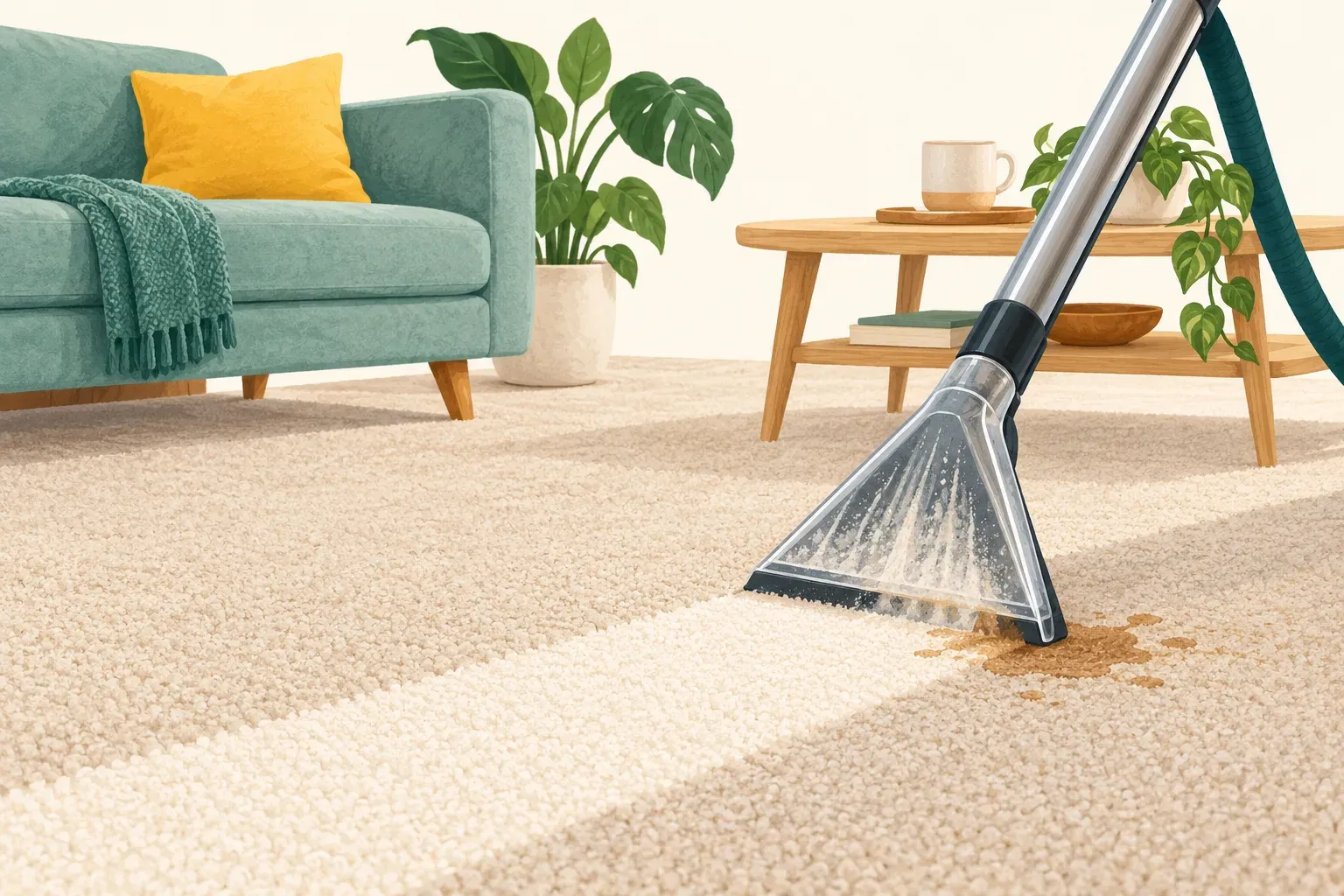
Professional carpet cleaning in Ireland was advertised at about €30 to €60 a room in October 2026, and most companies use hot water extraction, which sprays a cleaning solution into the pile and sucks it straight back out with the dirt. It lifts ground-in dirt that hoovering cannot reach. Drying time varies with the method and the room, so ask before you book, and deal with spills fast: blot, never rub.
What does carpet cleaning cost?
Carpet cleaning is usually priced per room, with stairs, rugs and furniture priced separately. In advertised prices we checked in October 2026:
| Item | Advertised price |
|---|---|
| Single bedroom | From €35 |
| Dining room | From €40 |
| Double bedroom or living room | From €45 |
| Per room, another provider | €30 to €60 |
| Stairs, rugs, sofas, mattresses | Usually quoted separately |
These are advertised prices, not a national average, and some companies add a minimum call-out charge. Carpet cleaning by a VAT-registered business carries the reduced VAT rate of 13.5%, so check whether a quote includes VAT. Our price guide compares this with other services.
How the main methods work
| Method | How it works | Good for | Things to know |
|---|---|---|---|
| Hot water extraction | Solution sprayed in and immediately extracted with a powerful machine | Most fitted carpets, ground-in dirt | Leaves the carpet damp; drying time depends on airflow |
| Low moisture or encapsulation | A small amount of solution worked in with a machine, then hoovered off when dry | Quick turnarounds, lightly soiled carpets | Less effective on heavy soiling |
| Shampooing | Foam worked into the pile with a rotary brush | Heavily soiled areas | Residue can attract dirt if not rinsed well |
| Dry compound | Absorbent powder brushed in and hoovered out | Delicate carpets, minimal wetting | Needs thorough hoovering afterwards |
For most homes, hot water extraction is the default professional method. Hired machines from supermarkets and DIY shops work in a similar way but are usually less powerful, so carpets stay wetter for longer.
How long does a carpet take to dry?
There is no single answer. It depends on the method, the carpet fibre and thickness, how much water was used, and the room. To help it dry:
- Open windows if the weather allows, or run a dehumidifier.
- Keep the heating on low and the doors open to move the air.
- Stay off the carpet, or wear clean socks if you must cross it.
- Put foil or plastic tabs under furniture legs if furniture has to go back early, to stop stains from wood or metal.
A carpet that stays damp for a long time can start to smell. In a cold, damp house in winter, ask the cleaner about a lower-moisture method or book a drier week.
Upholstery, rugs and mattresses
Before anyone cleans a sofa or armchair, check the care label: some fabrics are water-cleanable and some need a solvent or dry method. A good upholstery cleaner will check the label and test a hidden area first. Loose covers may be machine washable, but wash them all together so the colours stay matched.
Rugs, especially wool, silk and handmade rugs, are often better cleaned off site by a specialist. Mattresses can be hoovered and spot-cleaned at home; if anyone in the house has a dust mite allergy, the HSE recommends allergy-proof bedding covers. See our dust mites and allergies guide.
How to deal with common stains
Act quickly, and test any product on a hidden patch first.
- Scrape off solids with a blunt knife or spoon
- Blot liquids with a clean white cloth or kitchen roll, pressing down, working from the outside in
- Never rub, which spreads the stain and frays the pile
- Use cold water on unknown stains, blood and anything with protein, because heat can set them
- Rinse with a little clean water and blot dry, so no cleaning product is left in the pile
- Leave a pad of kitchen roll weighted down overnight to draw up the rest
A few specific cases:
- Red wine and tea: blot, then work in a little cold water and blot again, repeating until no colour transfers.
- Mud: let it dry completely, then break it up and hoover.
- Candle wax: freeze hard with an ice pack, chip off, then ask a professional about the stain left behind.
- Pet accidents: blot, rinse with cold water and blot again. Odour often comes back because it soaks into the underlay, which is where hot water extraction helps.
Do not reach for bleach on carpets, and never combine stain removers: bleach mixed with ammonia or acids such as vinegar releases toxic gases. Vinegar itself can damage natural stone and hardwood, so keep it off nearby floors and skirting.
Carpets, pets and children
Ask any carpet cleaner what they use. Some disinfectants are a real risk for pets:
- Phenol-based disinfectants are particularly toxic to cats and should be avoided where they live.
- Concentrated tea tree and some other essential oils are toxic to dogs and especially cats, so be cautious with scented carpet fresheners.
- Follow dilution and rinsing instructions and keep pets and toys off for the period the label states.
If you think a pet has been poisoned, contact a vet straight away and keep the product label. Our guide to safe cleaning products around children and pets covers this in more detail.
Carpets at the end of a tenancy
The RTB says tenants should leave the property clean and in a similar condition to when they moved in, allowing for normal wear and tear. Its checklist does not require every tenant to pay for professional cleaning. A landlord can deduct for damage beyond normal wear and tear, so heavy staining or pet odour is worth dealing with before you leave. Take dated photos at the start and end of the tenancy. See getting your deposit back and our end of tenancy cleaning checklist.
Before the cleaner arrives
- Hoover thoroughly, or check whether the cleaner does a pre-hoover
- Move small furniture, ornaments and anything on the floor
- Point out stains and tell the cleaner what caused them
- Mention wool or natural fibre carpets and any rugs you are worried about
- Make sure there is parking close to the door for the machine
- Plan where children and pets will be until the carpet is dry
Find carpet and upholstery cleaners or cleaners by county, such as in Dublin, Cork or Kildare. For a full spring clean, pair it with our deep cleaning checklist.
Questions people ask
How much does carpet cleaning cost per room in Ireland?
In advertised prices we checked in October 2026, one provider charged from €35 for a single room and from €45 for a double or living room, while another gave a range of €30 to €60 a room.
How long does a carpet take to dry after cleaning?
It depends on the method, the carpet, how wet it was left and how well the room is ventilated and heated. Ask the cleaner for their usual drying time and plan to keep foot traffic and furniture off until it is dry.
Do I need to clean the carpets when I move out of a rental?
The RTB says to leave the property clean and in a similar condition to when you arrived, allowing for normal wear and tear. It does not say every tenant must pay for professional cleaning, but stains or smells beyond normal wear can lead to deductions.
Is carpet cleaning safe for pets?
Ask the cleaner what products they use, follow any rinsing and drying instructions, and keep pets off the carpet for the period the label states. Avoid phenol-based disinfectants and essential oils around cats.