Limescale and Hard Water in Ireland: How to Descale Safely
Published 29 October 2026 · 5 min read
Short answer
Limescale forms when hard water is heated or evaporates, and hardness varies by water supply zone across Ireland, so check yours with the Uisce Éireann checker. Descale little and often with a suitable descaler or vinegar where the surface allows, and never mix an acid descaler with bleach.
Limescale is the chalky white or grey crust that forms when hard water is heated or left to evaporate. Hard water is common in Ireland, but it varies by water supply zone rather than by county, so check your own supply with Uisce Éireann's address and Eircode checker. Descale little and often, use a descaler or vinegar only on surfaces that can take acid, and never let an acid descaler meet bleach.
What causes limescale?
Water picks up dissolved minerals as it passes through rock and soil. Uisce Éireann explains that these dissolved minerals cause hardness, and heating hard water produces limescale. That is why it builds up fastest where water is heated or evaporates:
- Kettles, irons and coffee machines
- Shower heads, taps and the base of tap spouts
- Shower screens and tiles where splashes dry
- Toilet bowls along the waterline and under the rim
- Washing machines, dishwashers and immersion heaters
- Glass, where it leaves cloudy spots
How hard is your water?
Hardness in Ireland varies by supply, and neighbouring areas can be very different. For example, Sligo County Council publishes average hardness for its supplies:
| Supply (Co. Sligo) | Average hardness (mg/L as calcium carbonate) | Classification |
|---|---|---|
| Killaraght | 485 | Excessively hard |
| Riverstown | 320 | Hard |
| South Sligo | 180 | Moderately hard |
| Lough Easkey | 32 | Soft |
These are published supply averages, not household measurements, and they do not rank Sligo against other counties. They show how much hardness can change within a single county. We have not found a current official ranking of Ireland's hardest water areas, so the reliable approach is to check your own address or Eircode. If you are on a group water scheme or private well, ask the scheme or have the water tested.
How to descale safely
Most limescale removers are acids, and that is the key safety point. The National Poisons Information Centre warns that bleach mixed with acids, including vinegar and some toilet cleaners, releases chlorine gas, which can seriously injure the lungs. Bleach with ammonia releases chloramine gases.
- Never use a descaler and a bleach-based cleaner together, or one straight after the other, on the same surface. Rinse thoroughly with water in between and ventilate.
- Be especially careful with toilets, where people often pour in a bleach and a limescale remover on the same day.
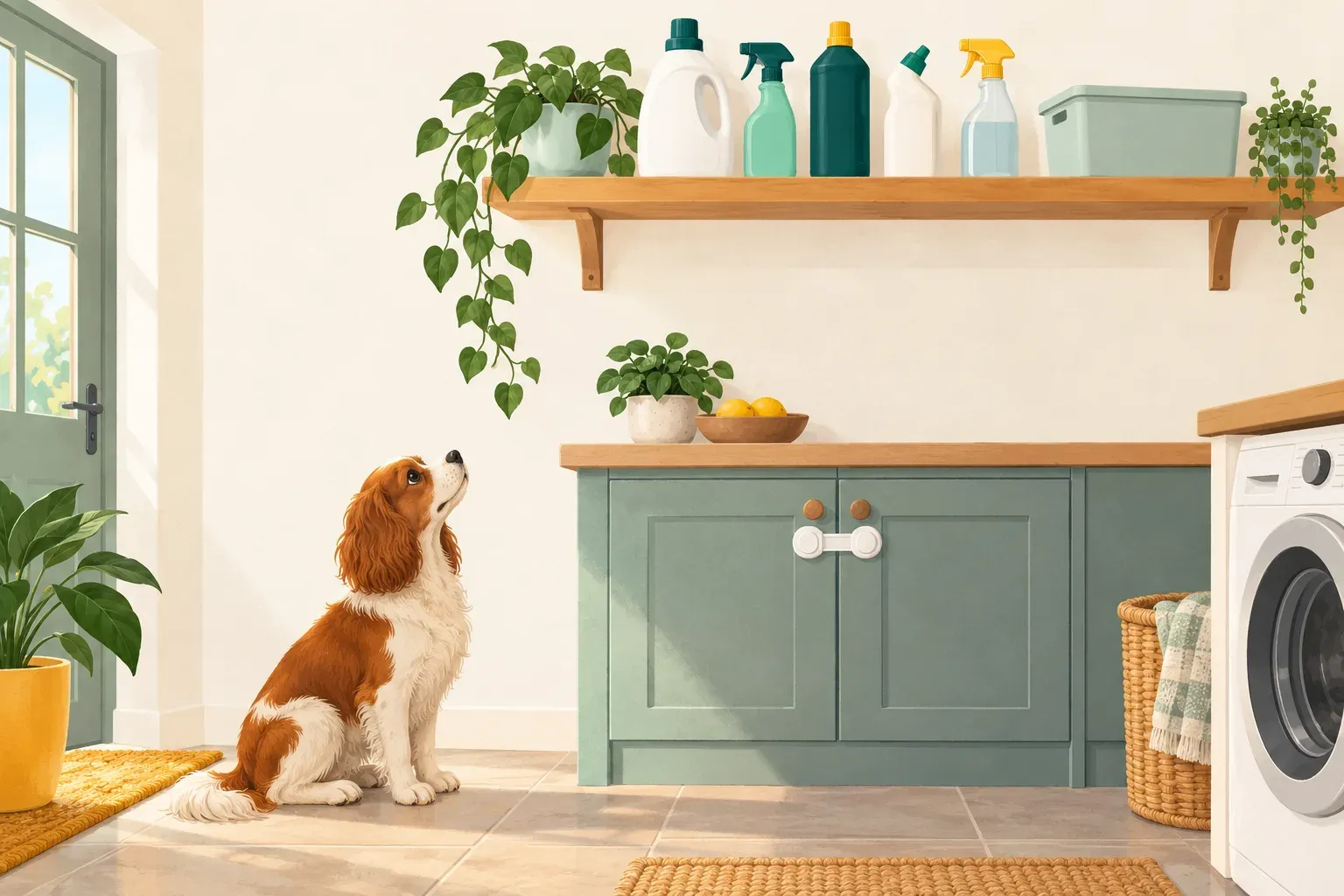
- Wear gloves, keep products in their original containers, and store them out of children's sight and reach, as the NPIC recommends.
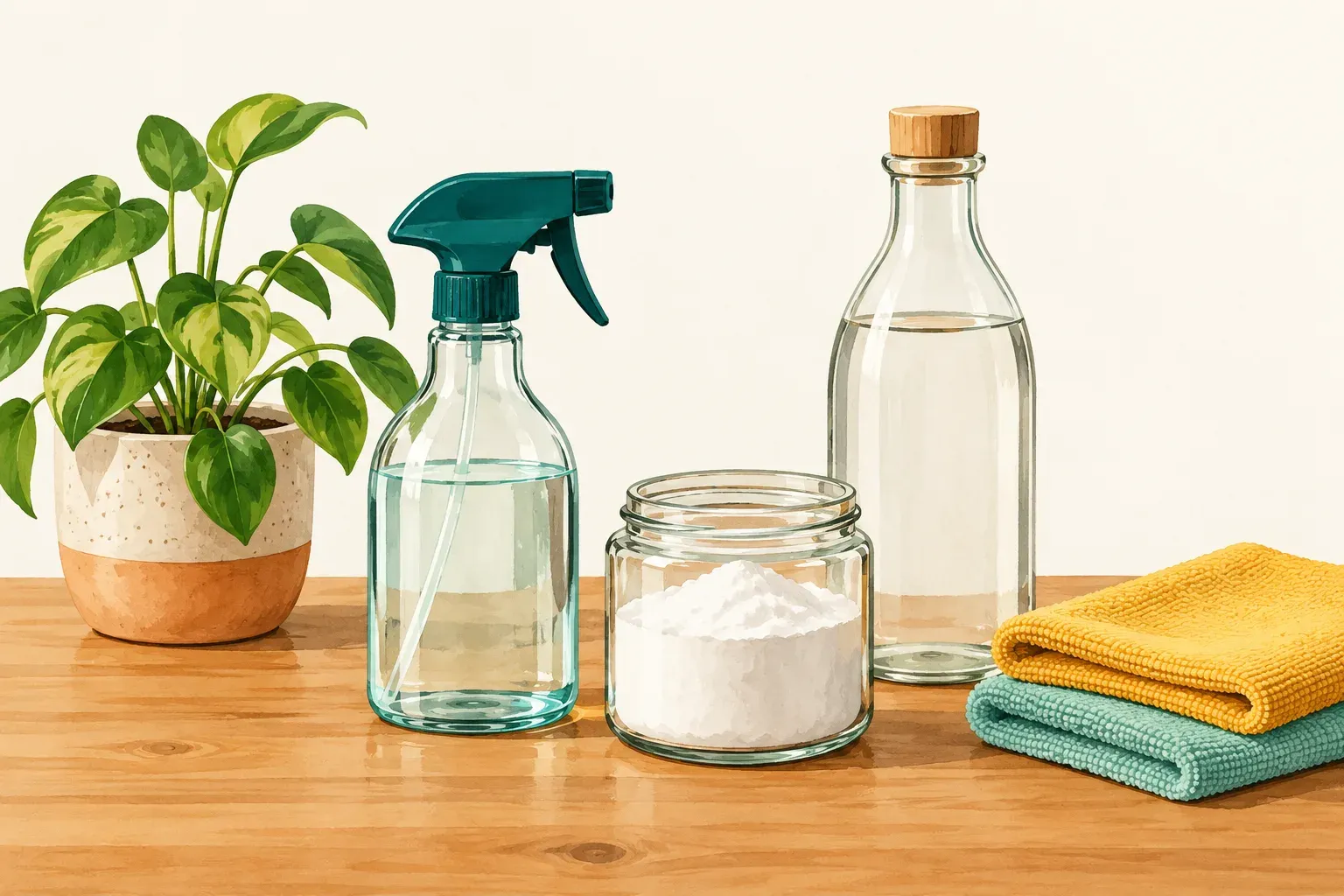
Vinegar is a handy household descaler and is useful for mineral deposits and soap scum. But its acid can damage natural stone, stone tiles and hardwood finishes, so keep it off marble, limestone, granite and travertine, and check appliance manuals before using it inside a machine. Vinegar is not a substitute for a suitable disinfectant. See our eco-friendly cleaning guide for more.
Room by room: descaling checklist
Kitchen
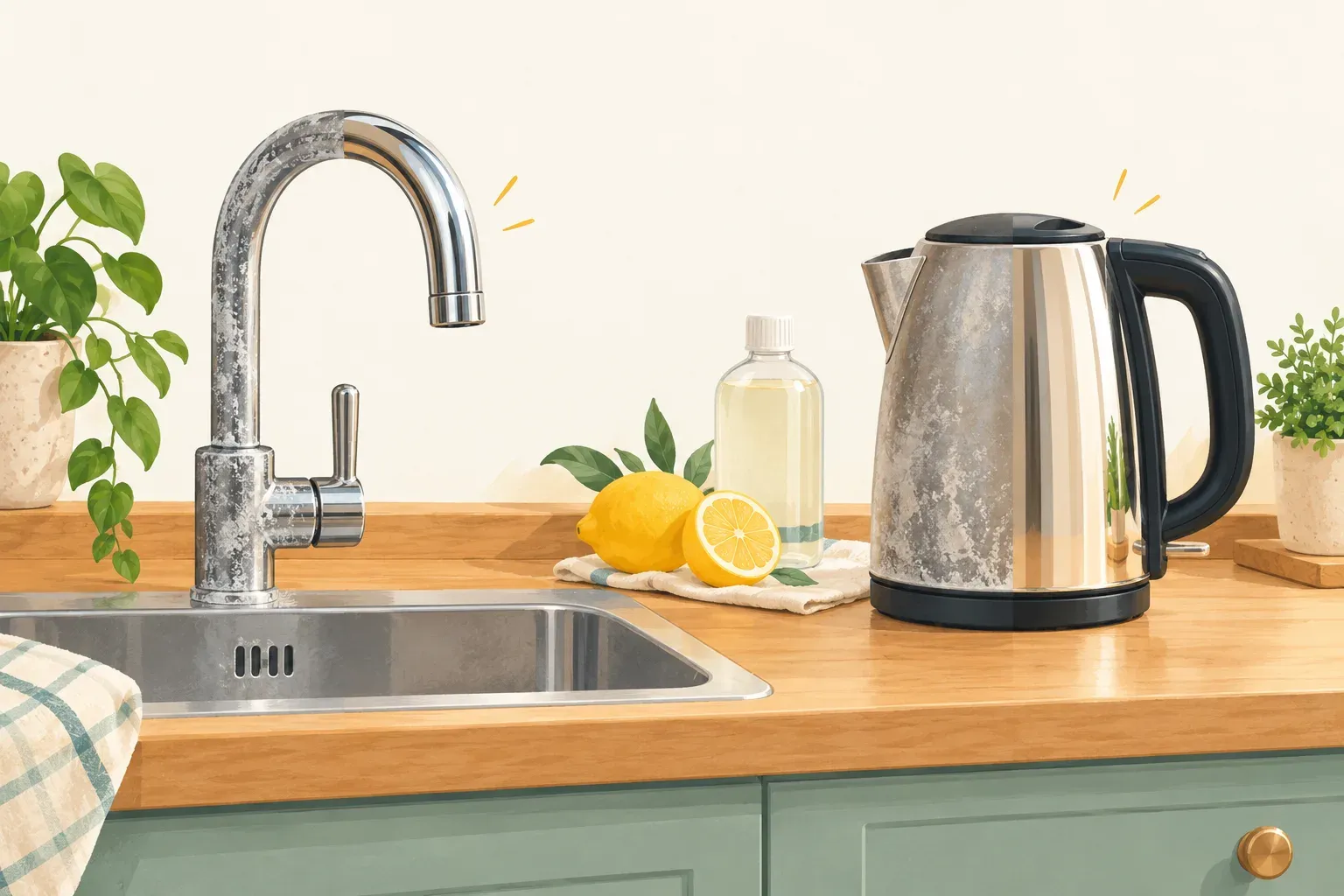
- Kettle: fill with a kettle descaler or a vinegar and water mix as the maker allows, leave, empty, then boil and discard fresh water two or three times
- Taps: wrap a cloth soaked in descaler or vinegar around the spout and base, leave, then rinse and buff dry
- Sink and draining board: wipe with a limescale spray suitable for stainless steel, then rinse
- Dishwasher: use a dishwasher cleaner and keep the salt topped up if it has a water softener
- Washing machine: run an empty hot wash with a machine descaler as the manual describes
- Coffee machine and iron: follow the manual's descaling routine
Bathroom
- Shower head: unscrew and soak in descaler or vinegar, or tie a bag of it around the head, then brush the nozzles and run hot water through
- Shower screen: spray with a bathroom descaler, leave as the label says, then rinse and squeegee
- Tiles and grout: descale where the tile allows, avoiding natural stone
- Taps and plugholes: as for the kitchen
- Toilet: use a toilet limescale remover on its own, under the rim and along the waterline, then flush and brush
Which descaler for which surface?
| Surface | What usually works | Take care |
|---|---|---|
| Chrome taps and shower heads | Bathroom descaler or diluted vinegar, rinsed off | Some coloured or brushed finishes need the maker's own product |
| Glass shower screens | Bathroom descaler, then squeegee | Screens with a protective coating may need a milder cleaner |
| Ceramic tiles and grout | Bathroom descaler, scrubbing brush | Rinse well afterwards |
| Natural stone | A cleaner made for stone | No vinegar or acid descalers |
| Stainless steel sinks | Limescale spray suitable for steel, or diluted vinegar | No abrasive pads |
| Toilets | Toilet limescale remover, used on its own | Never with bleach |
| Kettles and irons | Product descaler or as the manual says | Follow the appliance instructions |
Always read the label and test a hidden spot first if you are unsure.
How to stop limescale building up
Prevention is far easier than removing thick scale.
- Squeegee the shower screen after every shower. It takes seconds and stops spots drying on.
- Dry taps with a microfibre cloth after cleaning, rather than leaving them wet.
- Empty the kettle after use rather than leaving water standing in it.
- Descale little and often. Thin films come off quickly; thick crusts need repeated treatments.
- Use the dishwasher's salt and rinse aid if it has a softener.
- Consider a water softener if your supply is very hard. Get advice from a plumber on the type and where it should be fitted.
When to get help
Heavy limescale on shower screens, tiles and taps is one of the jobs a deep clean usually covers, and it is often charged as an extra on a regular clean. When you brief a cleaner, mention any natural stone, special finishes on taps and screens, and the products you would like them to use or avoid. Our cleaning brief builder helps, and you can find deep cleaning services or cleaners by county, including Sligo, Roscommon and Dublin.
Questions people ask
How do I find out if I live in a hard water area?
Uisce Éireann has an address and Eircode checker for water quality, including hardness. Hardness varies by water supply zone, so check your actual supply rather than assuming your whole county is the same.
How often should I descale the kettle?
Whenever you see a film or flakes inside. In a hard water area that will be far more often than in a soft water area. Follow the kettle maker's instructions.
Can I use vinegar to descale?
Vinegar works on mineral deposits and soap scum, but its acid can damage natural stone, stone tiles and hardwood finishes. Check the surface and appliance instructions first, and never mix it with bleach.
Which part of Ireland has the hardest water?
We have not found a current official county-by-county ranking. Hardness varies by supply zone, even within one county, so the only reliable answer is to check your own address.