Eco-Friendly Cleaning in Ireland: What Works and What to Avoid
Published 29 October 2026 · 4 min read
Short answer
Greener cleaning mostly means using fewer, better products: EU Ecolabel cleaners, reusable microfibre cloths, and vinegar or bicarbonate of soda only where they suit the surface. Never mix vinegar with bleach, and take unwanted chemicals to a civic amenity site rather than the drain.
Greener cleaning is mostly about using fewer, better products: cleaners that carry the EU Ecolabel, reusable microfibre cloths that work with water alone, and vinegar or bicarbonate of soda only on surfaces they suit. It also means disposing of old chemicals properly rather than pouring them down the sink. None of it requires a cupboard full of special products.
Look for the EU Ecolabel
The EU Ecolabel is the official European environmental label, recognisable by its flower logo. The European Commission says certified cleaning products meet criteria covering reduced hazardous substances, ingredients, packaging, environmental impacts and cleaning performance. The performance part matters: an Ecolabel product has to clean properly, not just be gentler.
Relevant categories include hard-surface cleaners, laundry detergents and washing-up products. You can search the EU Ecolabel product catalogue to check a brand.
Words like "natural", "green" or "eco" on a bottle are not the same as a certified label. If a product claims to be environmentally friendly, look for the Ecolabel or another named certification you can check.
Microfibre cloths: the simplest swap
Reusable microfibre cloths can remove dirt with water and reduce cleaning-chemical use. For dusting, glass, mirrors and wiping down most surfaces, a damp microfibre cloth does the job without any spray.
Two things to know:
- They need regular washing. Microfibre cloths need laundering to stop them transferring contamination from one surface to another. Use different colours for the toilet, the rest of the bathroom, and the kitchen.
- They are synthetic. They are generally made from polyester and nylon. Make them last: wash them without fabric conditioner, which clogs the fibres, and keep using them for as long as they work.
Vinegar: useful, but not everywhere
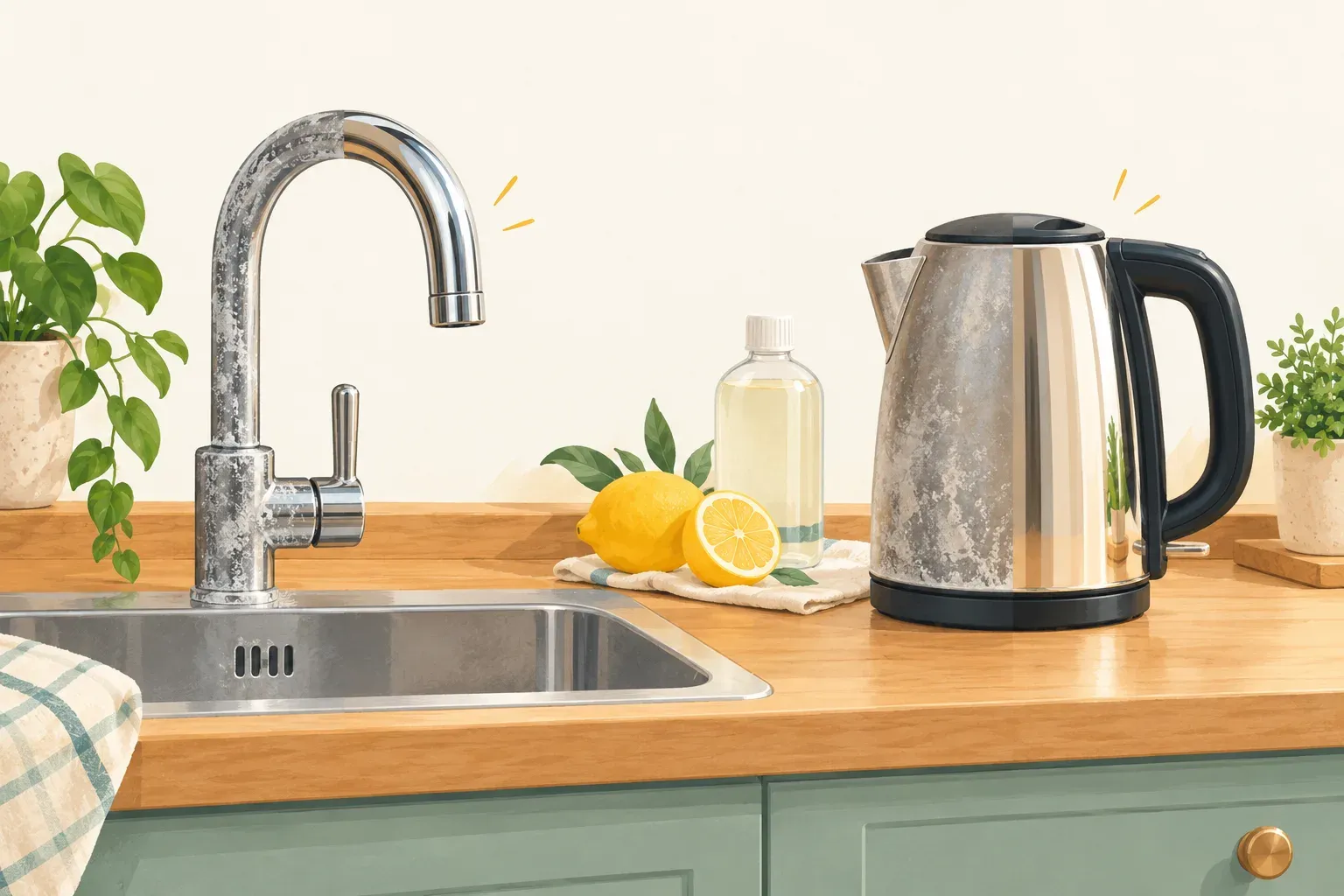
White vinegar is good at mineral deposits and soap scum, which makes it handy for limescale on taps, kettles and shower screens. But it has real limits:
| Use vinegar for | Keep vinegar away from |
|---|---|
| Limescale on taps and shower heads | Natural stone worktops and tiles, such as marble, granite and limestone |
| Soap scum on glass shower screens | Hardwood floors and wooden finishes |
| Descaling a kettle, if the maker allows | Appliances whose manuals say not to use it |
| Streaky glass and mirrors | Anything with bleach on it |
Its acid can damage natural stone, stone tiles and hardwood finishes, so check the surface and appliance instructions first. Vinegar is also not a substitute for a suitable disinfectant, so do not rely on it for raw meat spills or a toilet.
Most importantly, never mix vinegar with bleach. Bleach mixed with acids, including vinegar, releases chlorine gas, which can seriously injure the lungs. See our limescale guide for safe descaling.
Bicarbonate of soda: gentle, but abrasive
Bicarbonate of soda is a mild alkali, useful for grease, oven spills and odours. The FSAI recommends it as one option for cleaning the inside of a fridge.
Good uses:
- A paste for the inside of the oven, left overnight (see our oven cleaning guide)
- Wiping out the fridge
- Lifting grease from hobs and the sink
- Freshening bins
But it is also an abrasive, so avoid scrubbing delicate finishes with it unless the manufacturer allows it. Test on a hidden spot first, especially on stainless steel, gloss finishes and coated glass.
Mixing vinegar and bicarbonate of soda produces a lot of fizz, but it is an acid meeting an alkali, so each weakens the other. Use them separately, for the jobs each suits.
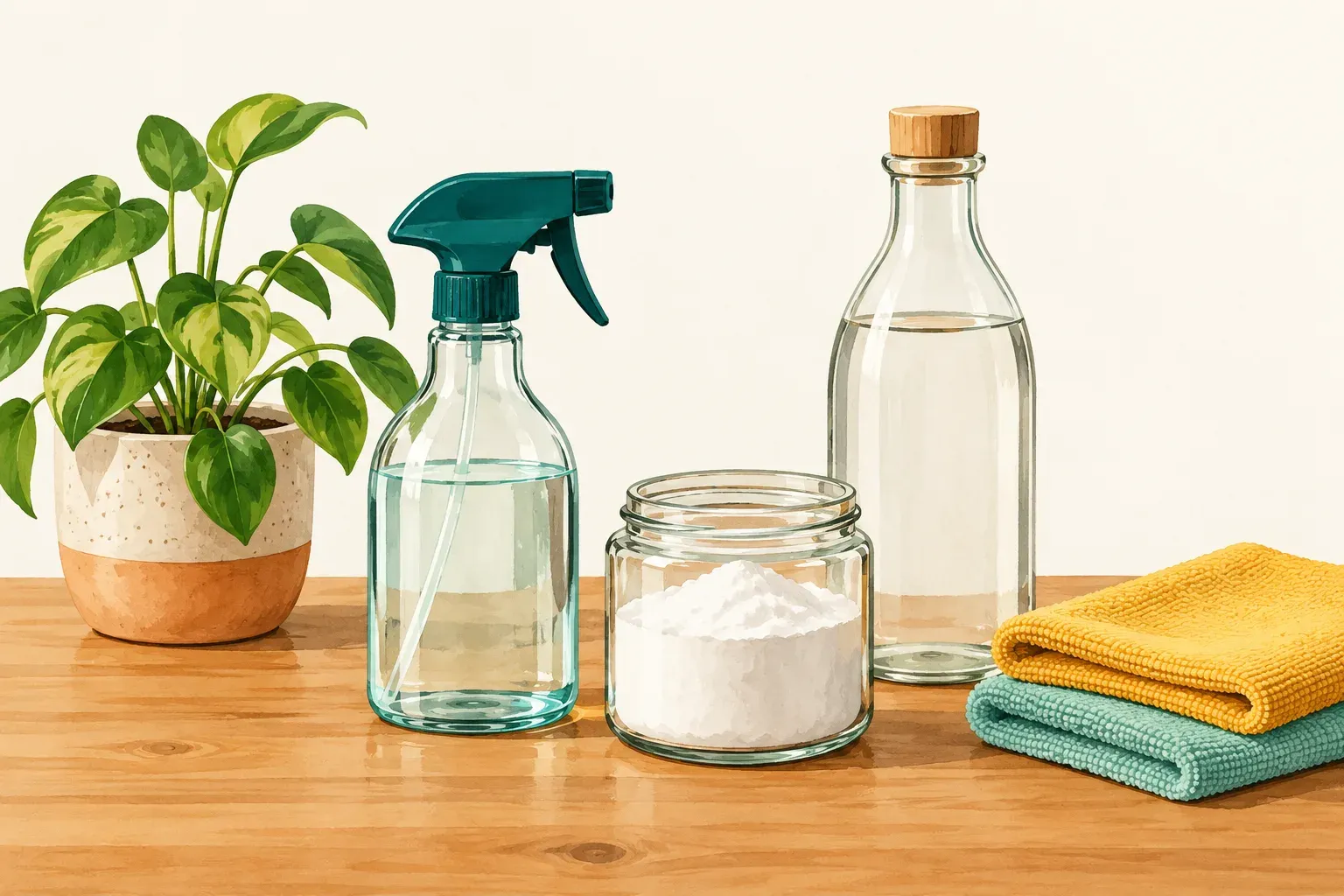
A simple, lower-impact cleaning kit
- A set of colour-coded microfibre cloths
- An EU Ecolabel multi-surface or hard-surface cleaner
- An EU Ecolabel washing-up liquid, which also works diluted for many surfaces
- A bathroom cleaner and a disinfectant for the toilet and raw meat spills
- White vinegar for limescale on suitable surfaces
- Bicarbonate of soda for ovens, fridges and grease
- A good hoover, a mop and a scrubbing brush
- Refills or concentrates where available, to cut down on packaging
Fewer products also means fewer to store safely and fewer to mix by mistake. See our guide to cleaning products around children and pets.
"Natural" does not always mean safe
Homemade cleaners with essential oils are popular, but some oils are a real risk for pets. Concentrated tea tree oil is toxic to dogs and especially cats, and oils such as pine, peppermint, cinnamon and wintergreen are potential hazards. The PDSA advises against cleaning with undiluted essential oils around cats. Keep homemade mixes in labelled containers, never in drinks bottles.
Disposing of old products properly
Clearing out old cleaners is part of greener cleaning, but how you do it matters.
- Don't pour unwanted chemicals down drains or put hazardous products in your ordinary bin. Follow the label's disposal advice and use a civic amenity site or council hazardous waste collection, as the HSA and Galway City Council advise.
- Check before you travel. Sites accept different hazardous wastes, so use the MyWaste locator and confirm your product is accepted.
- Batteries from cordless hoovers and gadgets can be recycled free at collection points and shops that sell equivalent batteries, with no purchase needed. Keep them out of your household bin.
- Old hoovers, steam mops and other electrical items can be recycled free at designated centres, and shops must take back an equivalent old item when you buy a replacement.
- Empty containers can usually go in recycling if they are rinsed and your collector accepts them. Check the label and your bin provider's rules.
Working with a cleaner
If you have a cleaner, tell them you would like greener products and whether you will supply them. Point out natural stone, wooden floors and anything that should not get vinegar or abrasives. Our cleaning brief builder has space for this, and our guide to what a regular clean includes explains who usually supplies products. You can browse cleaners by county to find someone near you.
Questions people ask
What does the EU Ecolabel mean on a cleaning product?
It means the product meets EU criteria covering reduced hazardous substances, ingredients, packaging, environmental impact and cleaning performance. Categories include hard-surface cleaners, laundry detergents and washing-up liquids.
Is vinegar a disinfectant?
Vinegar should not be treated as a substitute for a suitable disinfectant. It is useful for mineral deposits and soap scum, but where you need to disinfect, use a product made for the job.
Are microfibre cloths better for the environment?
They can remove dirt with water and reduce chemical use, and they are reusable. They are generally made from synthetic polyester and nylon, so wash them properly and keep using them for as long as they work.
Can I ask my cleaner to use eco products?
Yes. Many cleaners are happy to use products you supply, or to bring products you agree on. Say so when you book, and list any products or surfaces to avoid.