Moving House Cleaning Checklist: What to Clean Before You Move In
Published 29 October 2026 · 5 min read
Short answer
Clean a new home before your furniture arrives: inside presses and wardrobes, the fridge, oven, bathrooms and floors. Use the empty house to test smoke and carbon monoxide alarms, check vents, and clear away any chemicals left behind.
The best time to clean a new home is before your furniture and boxes arrive. In an empty house you can reach inside every press, behind every appliance and under where the beds will go, which is almost impossible once you have unpacked. Plan for a day, or book a cleaner for the morning you get the keys.
Below is a room by room move-in checklist, plus the safety checks that are easiest to do while the house is empty.
Before you start
- Get access early. If you can collect the keys a day before the van arrives, use that day for cleaning.
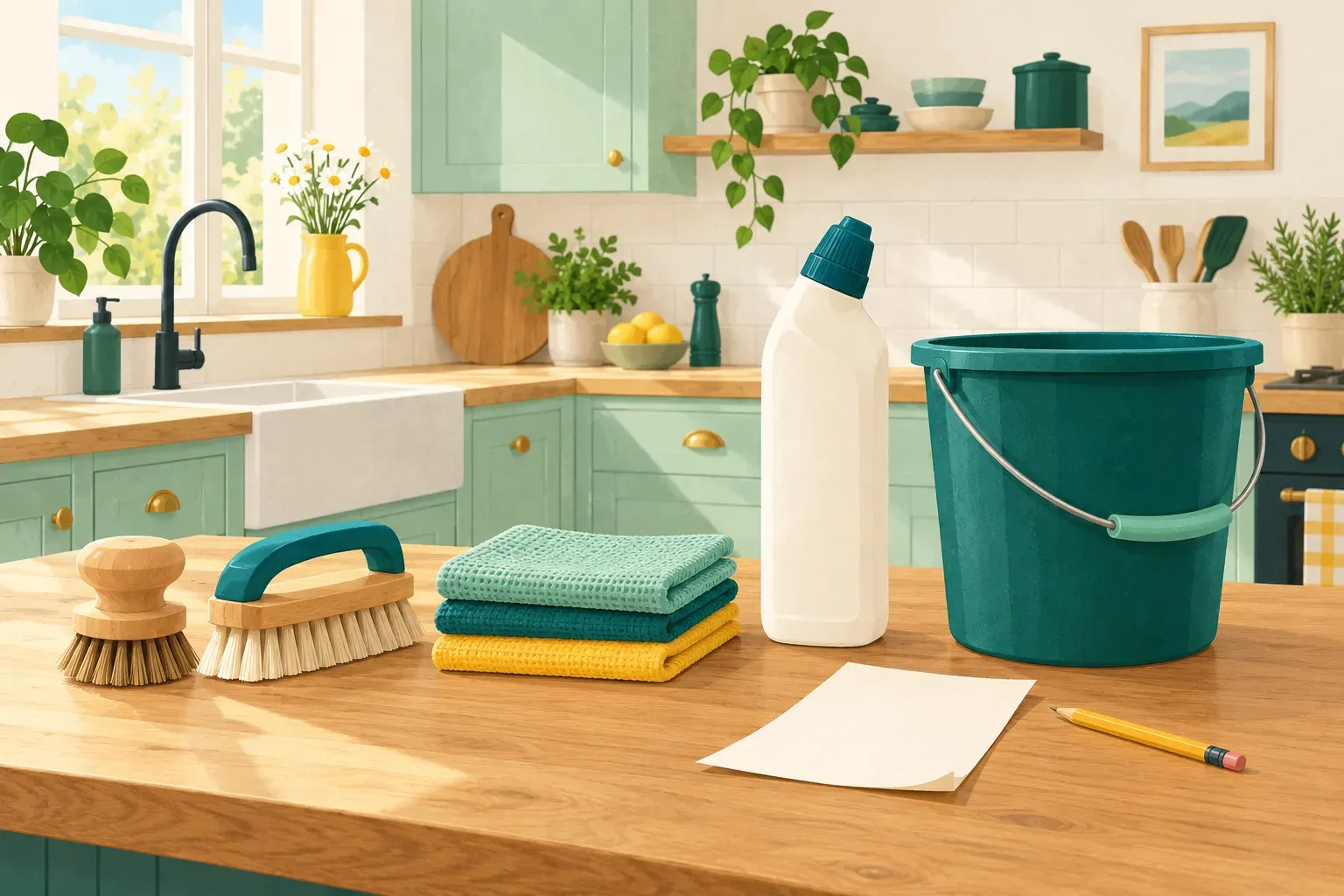
- Bring a starter kit: multi-purpose cleaner, bathroom cleaner, limescale remover, washing-up liquid, microfibre cloths, sponges, rubber gloves, bin bags, kitchen roll, a hoover, mop and bucket.
- Work top to bottom. Dust high surfaces first, then wipe, then do the floors last.
- Never mix cleaning products. Bleach with ammonia gives off toxic gases, and bleach with acids, including vinegar and some toilet cleaners, gives off chlorine gas, as the National Poisons Information Centre warns. Open windows as you go.
Kitchen
- Inside every press and drawer: hoover out crumbs, then wipe and dry
- Press doors, handles and the tops of wall units
- Fridge and freezer inside and out, including door seals
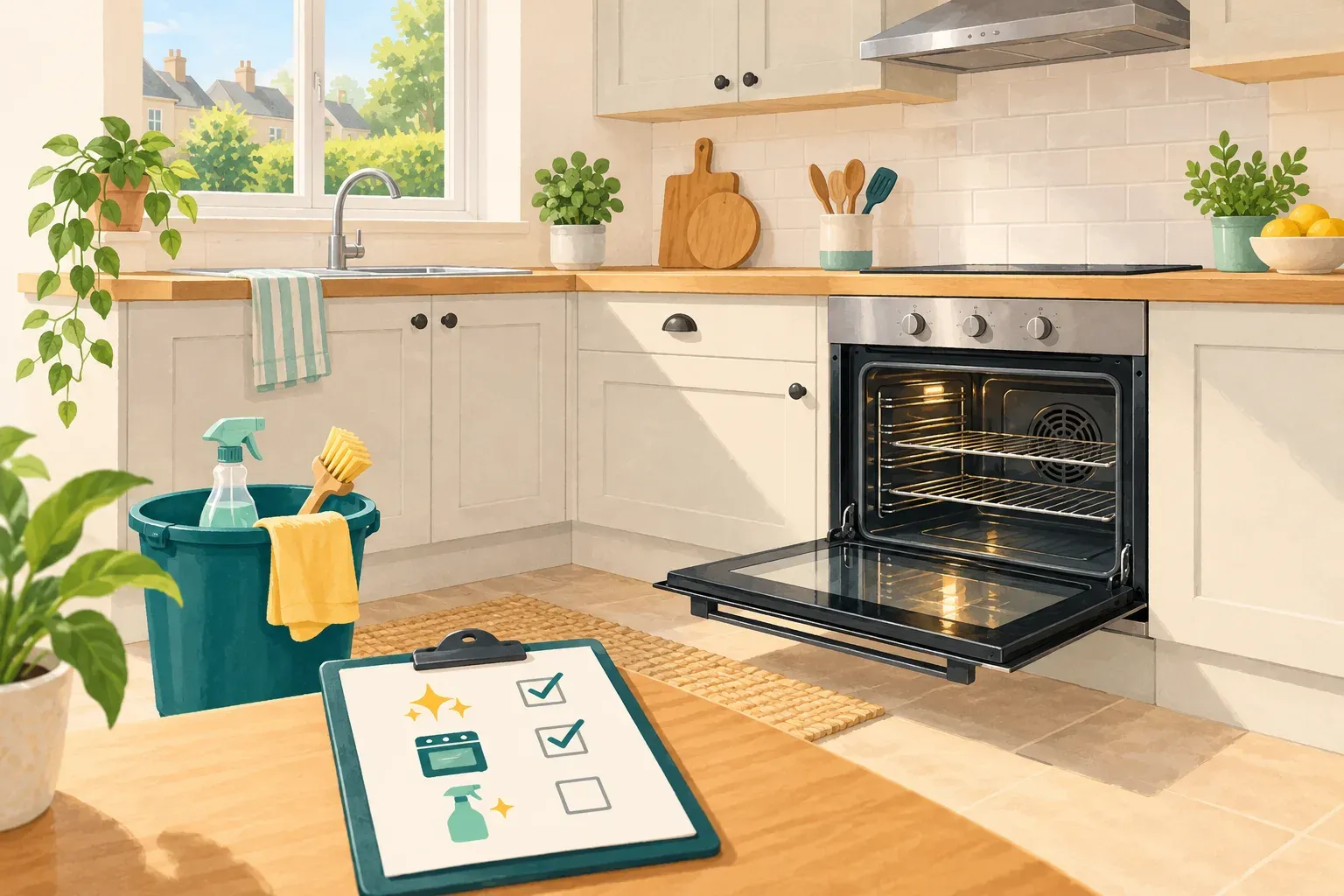
- Oven, racks, trays and door glass
- Hob, extractor hood and filter
- Microwave, if one was left
- Dishwasher filter and seals, washing machine drawer and door seal
- Sink, taps and plughole
- Worktops, splashback and tiles
- Behind and under the cooker and fridge if they can be moved
- Floor, including the kick boards under units
For the fridge, safefood recommends washing shelves, compartments and handles with warm soapy water, then rinsing and drying with clean kitchen roll or a clean tea towel. Bicarbonate of soda is another option the FSAI suggests for fridge interiors. Once it is running, check it reaches 5°C or below with a fridge thermometer, as the numbers on the dial do not necessarily show the temperature.
Start with new dishcloths and sponges. Safefood advises cleaning or replacing them at least every two days, so do not inherit the last occupant's.
Bathrooms
- Toilet inside, under the rim, seat, hinges and base
- Bath, shower tray and plugholes
- Shower head, hose and screen descaled
- Tiles and grout, with any mould treated
- Sink, taps and overflow
- Mirror and bathroom cabinet inside and out
- Extractor fan cover, and check the fan works
- Floor, including behind the toilet
Hard water is common in Ireland, though it varies by supply. Put your Eircode into Uisce Éireann's water hardness checker to see what you are dealing with, and how much descaling the kettle, showers and taps will need.
Bedrooms and living areas
- Wardrobes, shelves and drawers inside
- Skirting boards, doors, frames and handles
- Light switches, sockets and light fittings
- Radiators, including behind and between the panels
- Window sills, frames, tracks and the inside of the glass
- Blinds and curtain poles
- Carpets hoovered thoroughly, or cleaned if stained
- Hard floors mopped
If anyone in the family has allergies or asthma, the Asthma Society of Ireland recommends frequent vacuuming with a HEPA-filter vacuum and damp dusting. When the beds go up, the HSE recommends washing bedclothes at 60°C weekly. Our guide to cleaning for dust mites and allergies has more.
Hall, stairs and outside
- Front and back doors inside and out, letterbox and handles
- Banisters and stair edges
- Hot press and under-stairs storage
- Wheelie bins checked, emptied and rinsed
- Shed or garage cleared of anything left behind
Safety checks while the house is empty
These take minutes in an empty house and are easy to forget once you are settled.
| Check | What to do | Source |
|---|---|---|
| Smoke alarms | Test with the button, dust them, and replace standard batteries yearly. Then test weekly. | HSE |
| Carbon monoxide alarms | Test with the button weekly and follow the manufacturer's instructions | Housing Agency moving in checklist |
| Vents | Make sure wall vents and trickle vents are open; do not block them permanently | SEAI |
| Chimney | If you will use the fire, have it swept before the heating season | Government advice |
| Chemicals | Store cleaning products out of children's reach and sight, ideally in a locked press | NPIC |
If you have young children, set up a safe storage spot before you unpack the cleaning products. Keep them in their original labelled containers and never decant them into drinks bottles. The Poisons Information Centre's public line is 01 809 2166, 8am to 10pm every day; in an emergency call 112 or 999. See safe cleaning products with children and pets.
Clearing what the last occupants left
You may find half-used paint, old cleaning products or an unwanted appliance in a new home.
- Chemicals and paint: do not pour them down the drain or put them in the bin. Take them to a civic amenity site or council hazardous-waste collection, and use the MyWaste locator to check the site accepts them first.
- Electrical items and batteries: these can be recycled free at designated centres, and shops selling the same type of item must take back the old one.
Should you book a professional move-in clean?
A professional clean is worth considering if the property has been empty for a while, the last occupants left it in poor condition, or you simply do not have the time on moving day. It is essentially a deep clean of an empty house.
| Size | Advertised deep clean prices, October 2026 |
|---|---|
| 1 bed | €120 to €240 |
| 2 bed | €180 to €280 |
| 3 bed | €250 to €320 |
| 4 bed | €330 to €370 |
These come from two published Irish price lists, with different scopes; the lower figures are starting prices. Ovens are often extra, at €55 to €80 for a single oven. See deep clean prices for detail, or browse deep cleaning services and cleaners in your county.
If you are leaving a rental at the same time, our end of tenancy cleaning checklist covers the place you are moving out of.
Questions people ask
Should I clean a new house before moving in even if it looks clean?
Yes, if you can. It only takes a few hours in an empty house, and it is the one time you can reach inside every press, behind appliances and under where the beds will go.
Can I ask the previous owner or landlord to clean before I move in?
You can ask. Tenants leaving a rental are expected to leave it clean, and in a sale you can raise it with the seller through your solicitor or agent. Either way, a quick clean of your own before unpacking is still sensible.
What should I do with cleaning products the last occupants left behind?
If they are unlabelled or you do not want them, do not pour them down the drain or put them in the bin. Bring them to a civic amenity site or council hazardous-waste collection that accepts them.
Is a professional move-in clean worth it?
It can be, especially if the property was empty for a while or the oven and bathrooms need serious work. Advertised deep clean prices we checked in October 2026 started at €120 to €240 for a one-bed.