Winter Home Checklist for Ireland: Chimneys, Alarms, Gutters, Damp
Published 29 October 2026 · 4 min read

Short answer
Before winter, get the chimney swept, test smoke and carbon monoxide alarms, clear gutters and downpipes, and set up good habits against condensation. Sweep at least once a year before the heating season, and more often for some fuels and stoves.
The jobs that matter most before an Irish winter are safety jobs: get the chimney swept, test every smoke and carbon monoxide alarm, and clear the gutters and downpipes. After those, the biggest win is controlling condensation, because cold surfaces and closed windows are what turn a damp winter into a mouldy one. Use the checklist below in October or November, before the heating is on full time.
The winter checklist at a glance
- Chimney and flues swept before you light the first fire
- Smoke alarms tested and dusted, standard batteries replaced if due
- Carbon monoxide alarms tested
- Gutters, gullies and downpipes cleared of leaves
- Extractor fans and wall vents cleaned and working
- Window seals and reveals checked for mould
- A dry place set up for drying washing, or a plan to dry it outside on good days
- Old batteries and broken electricals taken for free recycling
Chimneys and stoves
Government advice is to have a chimney swept at least once a year, ideally before the heating season and after a period of not being used. One annual sweep is not enough for every installation, though: Meath Fire Service gives intervals that depend on the fuel, including every three months during use for wood-burning appliances. Check the advice for your fuel and your appliance's manual.
Before the first fire:
- Book a chimney sweep early, before the autumn rush
- Clear away birds' nests or debris the sweep finds
- Clean the stove glass and empty the ash pan once cold
- Check the carbon monoxide alarm in that room works
- Keep logs, kindling and anything flammable a safe distance from the fire
Sweeping is messy. Cover the floor and furniture near the fireplace, and plan a good hoover and damp-dust of the room afterwards.
Smoke alarms
The HSE advises:
- Test smoke alarms weekly using the test button.
- Keep them free of dust. A soft brush attachment on the hoover works well.
- Replace standard batteries once a year, or straight away if the alarm gives a low-battery warning.
- Replace sealed-life alarms when they reach their expiry date.
Winter is a good time to set a habit, such as testing every alarm on the same day each week. Pick a day you will remember, and put the date you changed the batteries in your phone.
Carbon monoxide alarms
The Housing Agency recommends testing carbon monoxide alarms weekly using the test button. Follow the alarm manufacturer's maintenance instructions, including when to replace the unit. Test them alongside your smoke alarms so it becomes one job.
Gutters and downpipes
Blocked gutters overflow, and overflowing water can soak into walls and cause damage. Insurer guidance advises clearing accumulated leaves and checking gutters, gullies and downpipes for blockages before winter.
- Wait until most leaves have fallen, so one clear-out catches the bulk of them.
- Check the gullies at ground level, where downpipes drain, and clear leaves and silt.
- Watch in heavy rain. Water spilling over the edge, or a downpipe that stays dry, means a blockage.
- Look for damp patches on walls below gutters, inside and out.
Where you cannot reach gutters safely, arrange a contractor able to work safely at height. Some window cleaners also clear gutters: see our window cleaning guide.
Damp and condensation
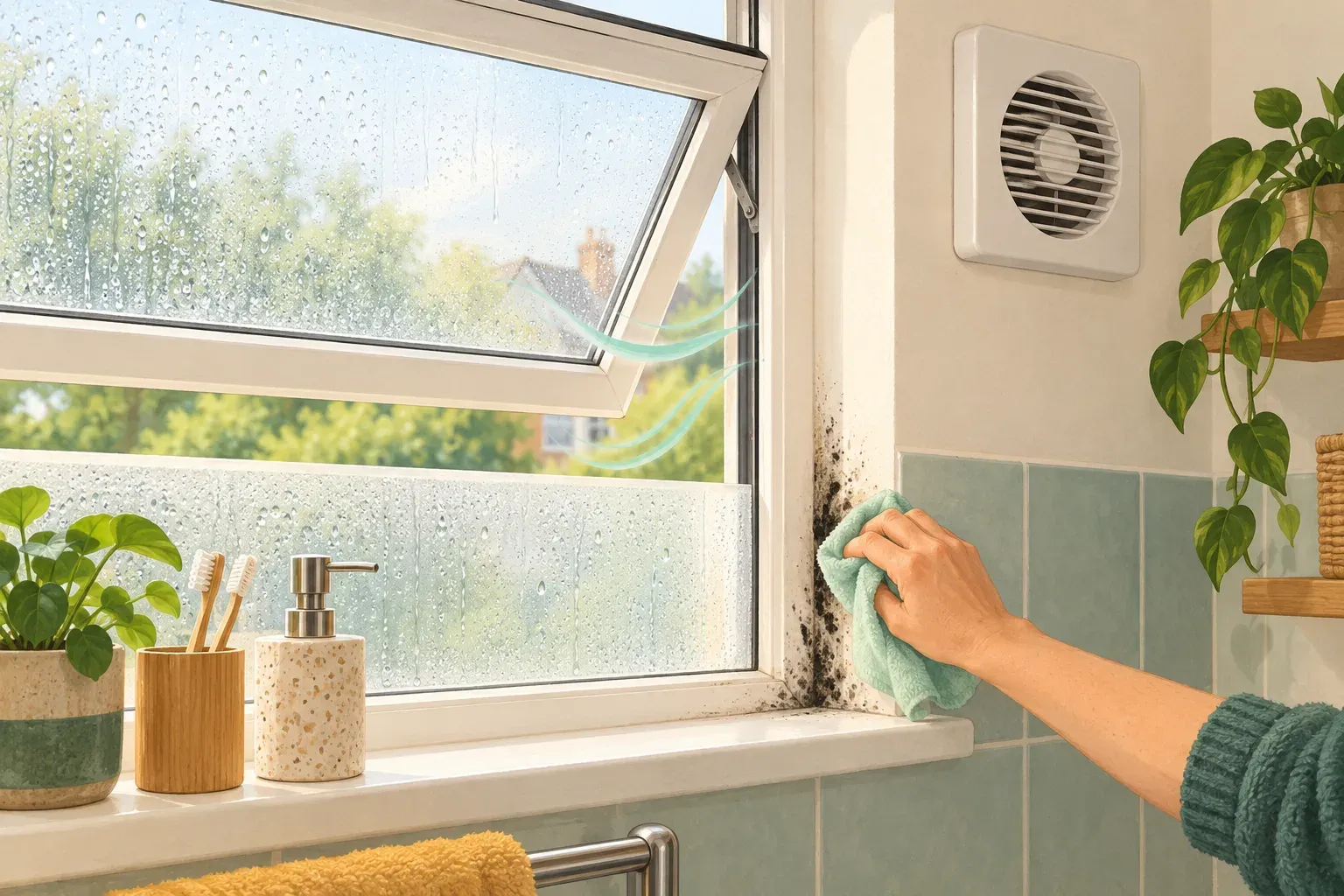
Winter is when condensation builds up. Cooking, showers and drying clothes add moisture to indoor air, and when it meets cold windows and walls it condenses. SEAI says inadequate ventilation and cold surfaces increase the risk of mould.
The HSE recommends using an extractor or opening a window when cooking or showering, and drying washing outside where possible. SEAI says not to permanently block air vents, even when it is cold.
- Clean the grilles of extractor fans and check they actually pull air
- Hoover dust from trickle vents and wall vents, and keep them open
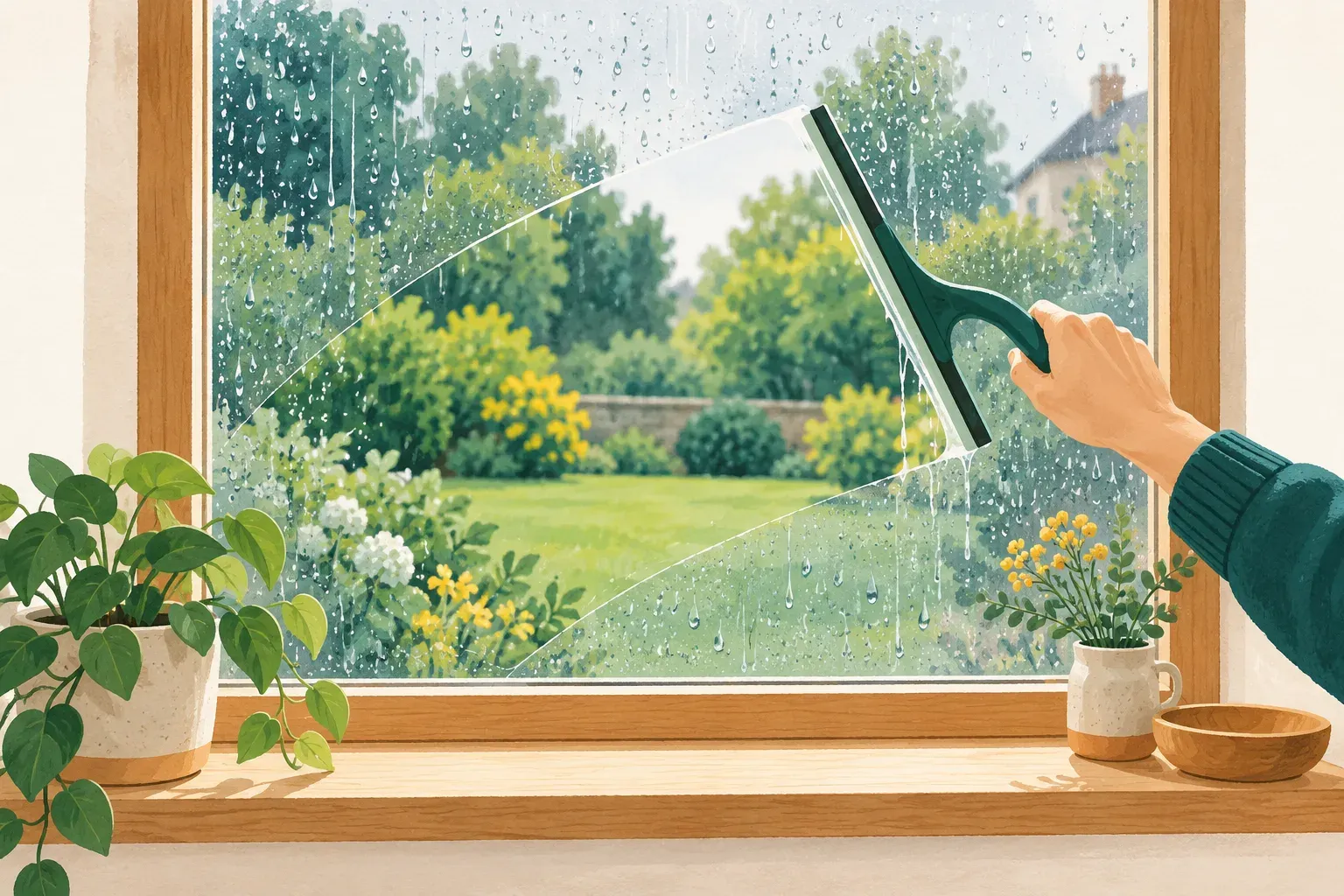
- Wipe condensation off windows and sills each morning
- Pull furniture a little away from outside walls
- Dry washing outside on dry days, or in one ventilated room with the door closed
- Keep lids on pots and close the kitchen door while cooking
- Check window reveals, bedroom corners and behind wardrobes for black spots
If you find mould, our mould and damp guide explains how to clean small patches safely and when to get professional help. If you rent, the RTB says rented homes must be free from damp, so report problems to your landlord in writing.
Indoor cleaning before the windows close
Once winter sets in, windows stay closed and you spend more time indoors. An autumn clean makes the house more pleasant for the months ahead:
- Wash curtains or hoover them, and dust blinds
- Wash duvets and pillows if the labels allow, and dry them thoroughly
- Hoover radiators and the gaps behind them before the heating goes on
- Clean windows inside so you get as much daylight as possible
- Clear the hall for wet coats and boots, with a good doormat inside and out
- Clean the tumble dryer filter and check the vent hose
If anyone in the house has allergies or asthma, the HSE recommends washing bedclothes at 60°C weekly and damp-dusting. See our dust mites and allergies guide, and for a top-to-bottom reset, our deep cleaning checklist.
Clear out old batteries and electricals
Autumn is a good time to gather dead batteries, broken heaters and old fairy lights. Batteries can be recycled free at collection points and at shops that sell equivalent batteries, with no purchase needed. Household electrical items can be recycled free at designated centres, and shops must take back an equivalent old item when you buy a replacement. Keep both out of your ordinary bin. Our eco-friendly cleaning guide covers disposing of old cleaning products.
Getting help
A deep clean in autumn covers most of the indoor jobs above, and some window cleaners clear gutters too. Chimney sweeping and alarm installation are specialist jobs, so book them separately. Browse cleaners by county, from Donegal to Kerry, and use our cleaning brief builder to describe what you need.
Questions people ask
How often should a chimney be swept in Ireland?
Government advice is at least once a year, ideally before the heating season or after a period of not being used. Some fuels and appliances need more frequent sweeping, so check the advice for your stove or fire.
How often should I test my smoke alarms?
The HSE says to test smoke alarms weekly using the test button and keep them free of dust. Replace standard batteries once a year or straight away if the alarm warns of a low battery.
Do carbon monoxide alarms need testing?
Yes. The Housing Agency recommends testing carbon monoxide alarms weekly with the test button, and following the manufacturer's maintenance instructions.
When should gutters be cleaned?
We have not found an official Irish interval. Check them after the leaves have fallen in autumn, and clear leaves and blockages from gutters, gullies and downpipes before the heaviest winter rain.