Cleaner Etiquette in Ireland: Stay Home, Tidy First, Tea or Not?
Published 29 October 2026 · 5 min read
Short answer
You do not need to stay home or leave, but stay out of the way if you are in. Do a quick tidy so the cleaner can clean rather than declutter, agree whether you are paying for hours or a task list, pay on time, and give feedback early and specifically.
You do not need to stay home, and you do not need to leave either. Whatever you choose, keep out of the cleaner's way, do a quick tidy beforehand so they can actually clean, and agree whether you are paying for hours or for a list of tasks.
Most awkwardness with cleaners comes from things nobody said out loud. Questions like these come up again and again in Irish discussions, for example this r/AskIreland thread on hiring etiquette. Here is a practical approach.
Should you stay home during the clean?
Either is fine. What matters is that the cleaner can work without being supervised or interrupted.
| Staying home | Going out | |
|---|---|---|
| Good for | First visits, questions, pointing out priorities | Letting the cleaner work quickly without getting around you |
| Downsides | You may feel awkward; the cleaner may work around you | You need to arrange access; questions wait until later |
| Tips | Stay in one room; ask them to do it first or last | Leave a short note with any changes for the day |
For the first visit, being home at the start is worth it. Walk round together, show where everything is, and then leave them to it. After a few visits, many households switch to giving the cleaner a key.
Working from home during the clean
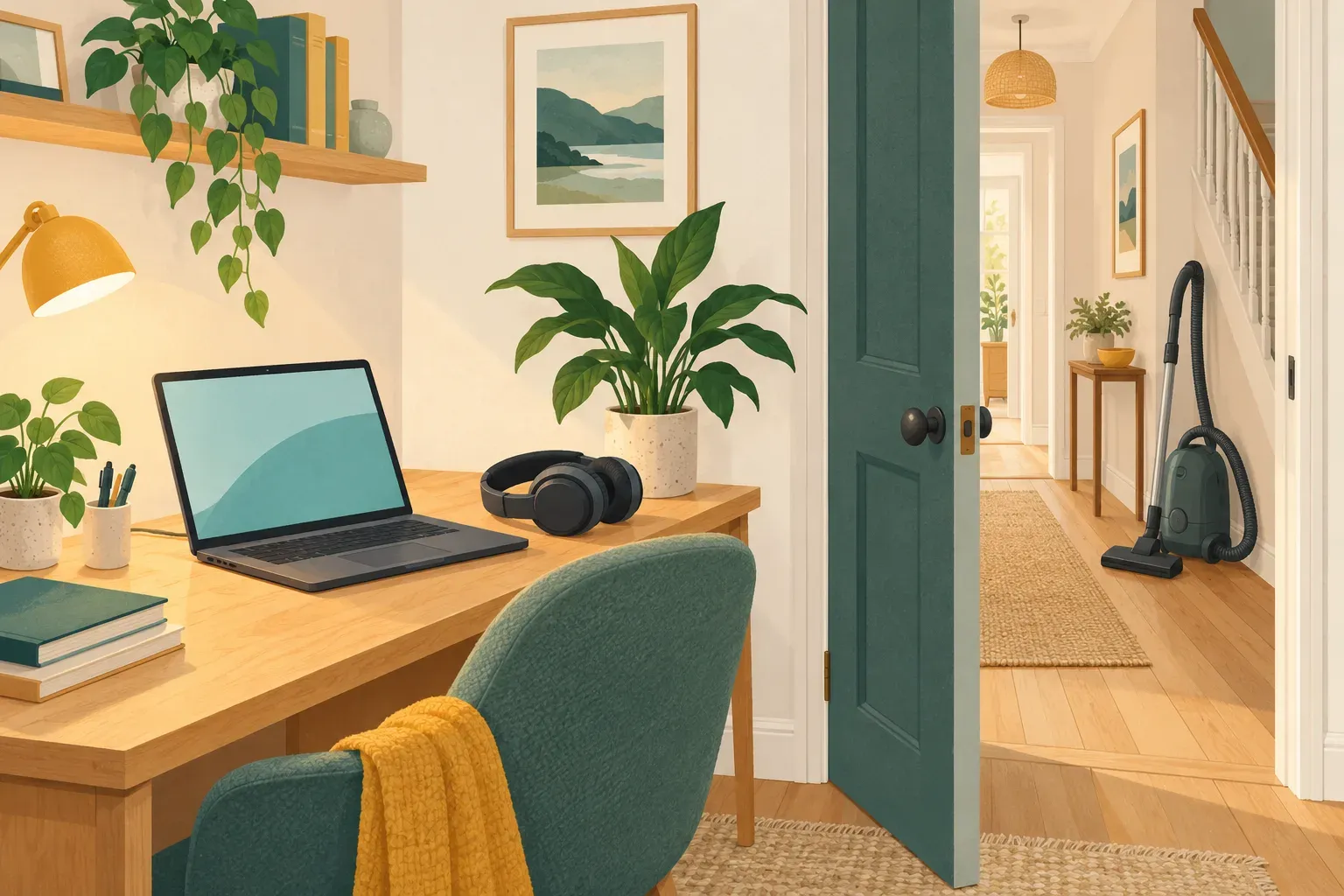
This is common now, and it works if you plan it:
- Pick one room as your workspace and tell the cleaner
- Ask them to clean that room first, before you start, or last, after you finish
- Warn them about scheduled calls if hoovering outside the door would be a problem
- Do not hover or follow them around to check
If you are taking calls all morning in a small apartment, a different cleaning day might be easier for both of you.
Should you tidy before the cleaner comes?
A quick tidy, yes. A full clean, no.
Cleaners clean surfaces, floors, kitchens and bathrooms. Picking up clothes, toys, post and dishes takes time out of the hours you are paying for. If the kitchen counter is covered in post and lunchboxes, the cleaner has to move all of it before they can wipe it.
A short reset the night before is usually enough:
- Clothes off the floor and into a basket
- Dishes into the dishwasher or stacked by the sink
- Toys into a box
- Clear the kitchen counters and bathroom surfaces
- Put away anything private or valuable
If you would like the cleaner to tidy, organise or do laundry, that is fine too. Just say so and expect it to use some of the time. And if your home is past the point of a quick tidy, that is fine as well; read our guide to cleaners for very messy homes, written without judgement.
Are you paying for hours or for a task list?
This is the source of most disagreements. There are two common arrangements:
- Paying for time. The cleaner works the agreed hours, working through your priorities in order. If they finish early, they move on to extra jobs.
- Paying for a list. You agree the tasks, and the cleaner leaves when they are done, sometimes early, sometimes late.
Both are reasonable. The problem is when each side assumes a different one. Agree which you are doing, and put your priorities in order so the most important jobs always get done. Our guide to how long a house clean takes helps you set realistic expectations.
Tea, breaks and the bathroom
Offering tea or water is a kind gesture. Show the cleaner where cups, the kettle and the toilet are on the first visit, and make clear they can help themselves.
If you employ the cleaner directly, breaks are part of the deal: the WRC code of practice for people employed in other people's homes says duties, hours and breaks should be specified, and that the worker's dignity and privacy should be respected.
Cameras and smart doorbells
Tell your cleaner if any camera covers the inside of your home. For directly employed cleaners, the same WRC code says employers should disclose intended workplace surveillance. For anyone else, it is simply good manners.
Giving feedback
Specific and early beats polite and silent. After the first couple of visits, say what was great and what you would like done differently:
- "The bathroom was brilliant. Could you spend a bit more time on the hob next week?"
- "Could you leave the study this time and do the inside of the fridge instead?"
If you are unhappy with a visit and you hired a business, you are entitled to a service delivered with reasonable care and skill. Give them a chance to put it right first. Our guide to what to do if the clean was poor covers the steps.
Paying, cancelling and holidays
- Pay on time, by the method you agreed. Leaving cash on the counter is fine if that is the arrangement, but put it in an envelope.
- Cancel with notice. Agree a notice period at the start. If you cancel at the last minute, expect to pay; your cleaner has kept that slot for you.
- Holidays. Tell your cleaner well in advance when you will be away, and ask them to do the same.
If you employ the cleaner directly, holidays are not optional extras. Part-time employees build up paid annual leave from the start, usually 8% of hours worked for someone on limited hours, and may qualify for public holiday entitlements. See domestic worker rights.
Tips, Christmas and pay rises
Tipping a cleaner is optional. The CCPC found that nine in ten consumers tip at least sometimes, but that research does not set a norm for cleaners. One Dublin cleaning firm suggests roughly the cost of one visit at Christmas for a regular cleaner, and is clear that this is its own judgement, not a standard.
Pay rises are worth thinking about each year. For directly employed cleaners, the adult minimum wage is set to rise from €14.15 to €14.94 an hour on 1 January 2027, so you must increase pay if you are paying close to the minimum. See tipping your cleaner in Ireland for more.
The short version
Be clear about what you want, keep out of the way, pay on time and say thank you. Most cleaners will meet you more than halfway. If you are still looking, start with cleaners in your county.
Questions people ask
Is it rude to work from home while my cleaner is there?
No. Plenty of people work from home during a clean. Agree which room you will be in, ask the cleaner to do that room before or after your working hours, and keep calls in that room.
Should I offer my cleaner tea or something to eat?
Offering a cup of tea or a glass of water is a kind gesture. Show them where things are on the first visit and let them help themselves, rather than interrupting the clean.
Can my cleaner use my bathroom?
Yes. Someone working in your home for several hours needs access to a toilet and somewhere to wash their hands. Say so on the first visit so they do not feel they have to ask.
What if my cleaner keeps leaving early?
Raise it calmly and early. Agree whether you are paying for set hours or for a set list of tasks, because those are different arrangements, and put whichever you choose in writing.